E-mail: marketing@hbhuamei.com
XPS and rock wool are both widely used insulation materials, but they are not designed for exactly the same applications. XPS is a rigid foam board that is particularly suitable for floors, roofs, walls, and moisture-exposed areas, while rock wool is widely used for exterior walls, roofs, curtain walls, partitions, and industrial insulation where fire and acoustic performance are important.
The simplest way to understand the difference is to look at the environment and function of the insulation layer.
XPS is generally the more direct choice when the project needs a rigid insulation board with low water absorption and good resistance to compression. It is commonly used for floors, concrete slabs, roofs, exterior walls, basements, and other applications where moisture or mechanical loading may be important. For readers who want to understand its structure and basic properties first What Is Extruded Polystyrene (XPS) provides a useful introduction.
Rock wool is generally the more direct choice when insulation needs to provide thermal insulation together with fire resistance and acoustic control. It is commonly used in exterior wall systems, curtain walls, partitions, roofs, and industrial applications. A more detailed explanation of its material structure and performance can be found in What Is Rock Wool Insulation.
In other words, the question is not simply which material is “better.” The more useful question is: what does the insulation layer need to do in that particular application?
Performance factor | XPS | Rock Wool |
Material structure | Rigid closed-cell foam board | Mineral fiber insulation |
Thermal insulation | Suitable for building thermal insulation | Suitable for building and industrial thermal insulation |
Moisture exposure | Strong fit for moisture-exposed applications | Can be used in moisture-managed systems with appropriate product selection |
Fire requirements | Requires the appropriate product and system specification | Particularly suitable where non-combustible insulation is required |
Acoustic performance | Not usually the main reason for selecting XPS | Strong acoustic absorption and noise-control application |
Mechanical conditions | Rigid board structure is useful where compressive resistance matters | Density and product type should match the system requirements |
This leads to a practical distinction: XPS is mainly selected for its rigid-board characteristics and moisture resistance, while rock wool is often selected when thermal insulation needs to be combined with fire and acoustic requirements.
XPS is a strong fit for floor insulation, especially where the insulation is installed below concrete slabs or exposed to moisture. Its rigid structure and low water absorption make it suitable for floor systems where both thermal insulation and dimensional stability matter.
For example, cold storage floors, below-grade areas, and other moisture-exposed floor assemblies can use XPS as part of the insulation system.
XPS is also widely used in roof insulation, particularly where a rigid board is required. Its low water absorption makes it suitable for applications such as inverted roof systems.
XPS can be used in exterior wall insulation systems where a rigid foam board is appropriate. The exact product and installation method should follow the requirements of the wall system.
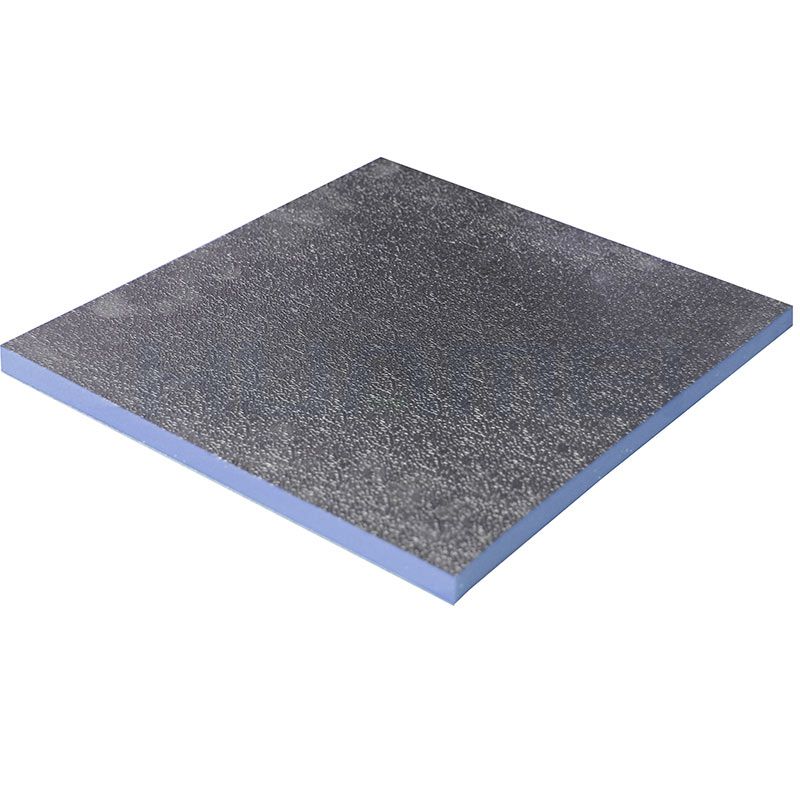
For buyers comparing available options, Huamei XPS Panel provides information on the XPS products and their construction applications.
Rock wool is widely used in exterior wall insulation because it combines thermal insulation with fire resistance. This makes it particularly relevant to building facades where fire safety is a major design requirement.
Rock wool is a particularly suitable material for curtain wall and partition applications when fire protection and acoustic performance are required together. It can be used around curtain wall and floor interfaces, partitions, and other fire-separation assemblies.
Rock wool is also used in roof insulation systems, including industrial and commercial buildings. High-strength rock wool products can be selected when the roof system requires greater mechanical stability.
For industrial projects, rock wool is commonly used for equipment, pipelines, storage tanks, and other thermal insulation applications. Here, selection depends on operating temperature, system construction, fire requirements, and mechanical conditions.
For a direct view of Huamei's available products, Huamei Rock Wool covers exterior wall, roof, curtain wall, and other rock wool applications.
Application | More direct material fit | Main reason |
Floor / concrete slab | XPS | Rigid board structure and moisture resistance |
Below-grade insulation | XPS | Low water absorption and rigid structure |
Inverted roof | XPS | Moisture resistance and rigid board form |
Exterior wall | XPS or Rock Wool | Depends mainly on system and fire requirements |
Curtain wall | Rock Wool | Fire protection and acoustic performance |
Partition wall | Rock Wool | Fire separation and acoustic absorption |
Roof | XPS or Rock Wool | XPS for rigid/moisture-focused systems; rock wool where fire performance is important |
Industrial equipment / pipelines | Rock Wool | Thermal insulation, fire resistance and industrial application suitability |
A practical selection process can be reduced to five questions:
If yes, XPS is often the more direct choice because its closed-cell structure and low water absorption suit these conditions.
2. Is non-combustible insulation a major requirement?
If yes, rock wool is generally the more relevant material because non-combustible rock wool products are widely used in fire-protection assemblies.
3. Does the wall or partition also need acoustic control?
If yes, rock wool deserves particular consideration because its fiber structure provides sound absorption and acoustic insulation.
4. Does the insulation need to carry or resist mechanical loading?
If yes, consider a rigid XPS board or a rock wool product specifically designed for the required mechanical conditions. The selected grade must match the actual system requirements.
5. Is the application a building envelope, partition, or industrial system?
Floors and moisture-exposed rigid-board applications point more directly toward XPS, while curtain walls, partitions, fire-rated assemblies, and many industrial insulation applications point more directly toward rock wool.
Huamei supplies both XPS and rock wool insulation products, allowing material selection to follow the requirements of the application rather than forcing one insulation type into every project.
For distributors, contractors, and project buyers, the key is to match material structure, moisture exposure, fire requirements, acoustic needs, mechanical conditions, and the overall building or industrial system before choosing the insulation product.
For examples of how insulation materials are applied across different projects, Huamei Insulation Solutions and Project Cases provides additional project references.
Contact Us
Insulation solutions LIST
Passive Solar Greenhouse vs Active Solar GreenhouseCryogenic Rubber Foam SupplierColorful Rubber Foam vs EVA Foam: Material and Performance ComparisonSound Absorbing Foam: Enhancing Acoustics and Noise ControlClass 1 Rubber Foam ApplicationHow to Choose Insulation for Roof SystemsColorful Rubber Foam ApplicationAcoustic Cotton Supplier: Why Huamei is the Ideal ChoiceHVAC InsulationGreen Foam Board InsulationRubber Foam InsulationDoes Cryogenic Rubber Foam Resist Condensation and Moisture?Can EPDM Rubber Foam Be Customized?Top 10 Soundproofing Insulation Materials: Comparing Effectiveness and CostHow To Choose The Right Rock Wool Insulation For Your ProjectPerformance of Colorful Rubber Foam under High and Low TemperaturesHigh-temperature Insulation glass wool applianceChina Rubber Foam Supplier - Why choose us?Polystyrene roof InsulationFoil-clad Glass Wool SuppliersPassive Solar Greenhouse: How to Heat a Greenhouse Without ElectricityGlass wool InsulationRubber foam tubeHow to Prevent Condensation on Cold Water Pipes?Glass Wool Pipe for SaleEPDM Rubber Foam ManufacturerHuamei Sound Insulation SolutionsInsulation Solutions:A Comprehensive Guide to InsulationClass 1 Rubber Foam manufacturerFormaldehyde Free Insulation ManufacturerHuamei Air Conditioning Energy Saving System SolutionHuamei Class 0 Rubber FoamSound Absorbing FoamXPS Insulation for Cold Storage FloorsGlass Wool PipeHow to Improve the Durability and Appearance of Colorful Rubber FoamRubber Foam RollsGlass Wool SupplierXPS vs Rock Wool: Different Applications and UsesWhere to Buy XPS Panels?The Cheapest Insulated Shed – Affordable and High-Quality SolutionsChoose the right rubber foam for youColorful Rubber Foam ProductsConcrete Roof Thermal Insulation BoardsThermal Insulation Solutions for Steel Structure BuildingsCopyright © Huamei Energy-saving Technology Group Co., Ltd. All Rights Reserved | Sitemap | Privacy Policy
Insulation solutions LIST: Insulation solutions LIST