E-mail: marketing@hbhuamei.com
How can I heat my greenhouse without electricity? For many greenhouse owners, project planners, agricultural investors, and facility builders, this question is not only about saving energy. It is also about building a greenhouse structure that can collect solar heat, reduce heat loss, store thermal energy, and release warmth when outdoor temperatures drop.
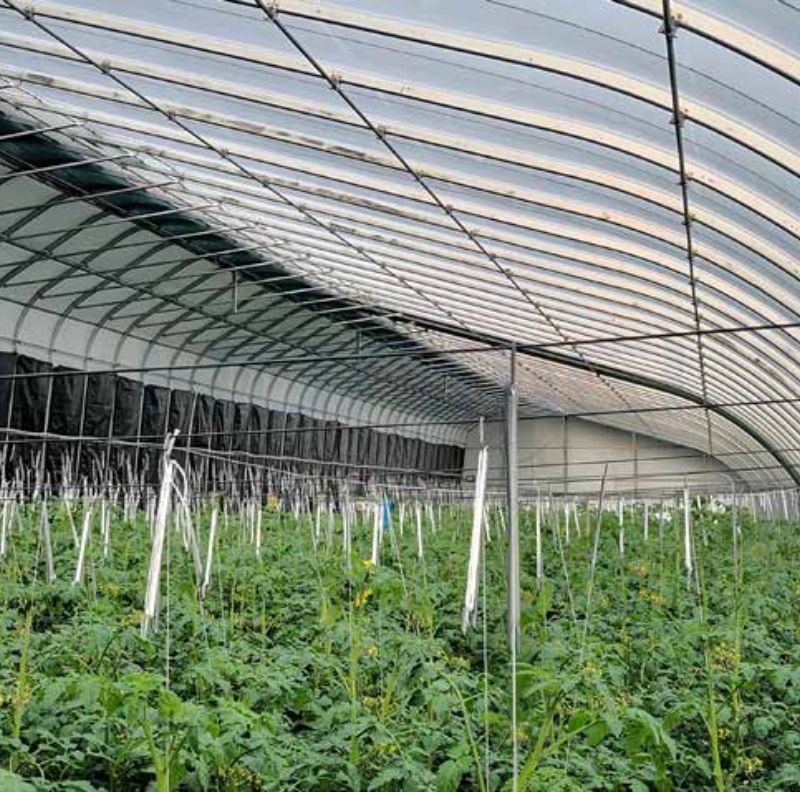
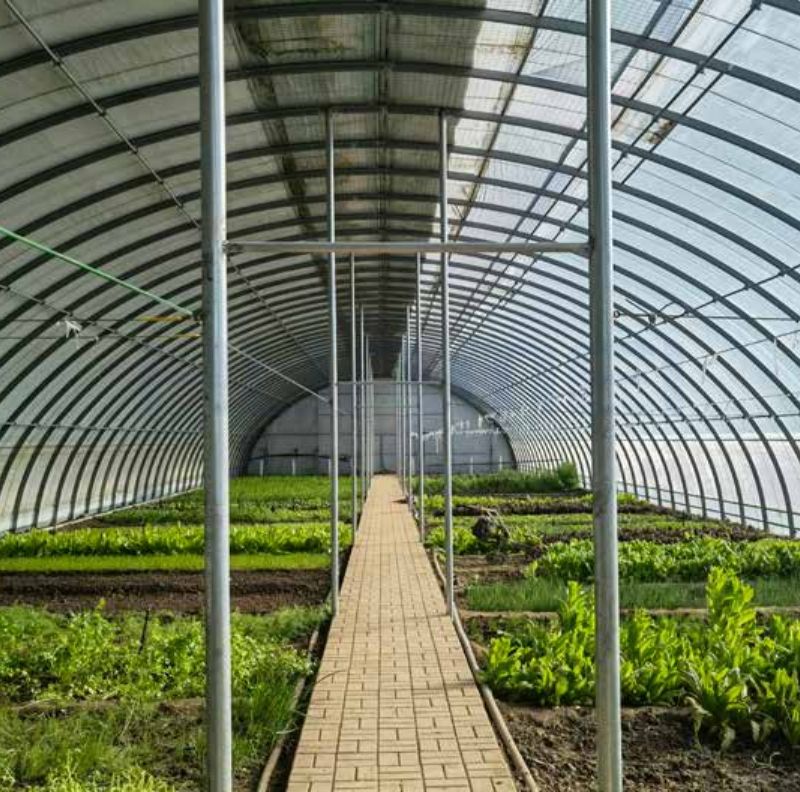
A passive solar greenhouse is one of the most practical solutions. Instead of relying mainly on electric heaters, a passive solar greenhouse uses sunlight, high-performance insulation materials, airtight construction, thermal mass, and heat storage design to maintain a more stable indoor environment.
The key point is simple: a passive solar greenhouse does not create heat from electricity. It captures solar energy during the day, stores that energy inside the greenhouse structure, and slows down heat loss at night. In this process, the greenhouse wall, insulation quilt, roof covering, sealing system, foundation, and heat storage layer all play important roles.
For modern greenhouse projects, the real performance of a passive solar greenhouse depends not only on its shape or orientation, but also on the quality of its insulation materials and the logic of its structure. A well-designed solar greenhouse is a complete thermal system.
A passive solar greenhouse is a greenhouse designed to use solar energy as its main heat source. It collects sunlight through the transparent surface, stores heat in the wall, floor, soil, water, or other thermal mass, and releases that heat when the temperature decreases.
Compared with an ordinary greenhouse, a passive solar greenhouse pays much more attention to heat balance. A standard greenhouse may warm up quickly during the day but lose heat rapidly after sunset. A passive solar greenhouse is designed to solve this problem by combining solar collection, heat storage, thermal insulation, and airtight protection.
In simple terms, the structure of a passive solar greenhouse usually includes:
A sun-facing transparent roof or front surface
A high-insulation rear wall or side wall
Thermal mass for heat storage
Greenhouse insulation materials around weak heat-loss areas
A movable or fixed insulation quilt
Airtight doors, joints, and edges
A foundation or base structure that reduces cold bridging
Optional air-soil heat exchange or solar heat storage systems
When these parts work together, passive greenhouse heating becomes more effective. The result is not just a warmer greenhouse, but a more stable and energy-saving greenhouse system.
The main answer is: a passive solar greenhouse heats without electricity by managing solar heat more efficiently.
During the day, sunlight enters through the transparent covering and warms the internal surfaces. Some of this heat is absorbed by the wall, ground, water storage, or other heat storage materials. At the same time, greenhouse insulation materials help reduce heat escape through the walls, roof edges, and covering system.
At night, the stored heat is slowly released back into the greenhouse. A high-performance insulation quilt or insulated covering can reduce heat loss from the transparent surface. Airtight construction also prevents warm air from escaping through gaps.
Therefore, greenhouse heating without electricity is not a single device. It is a structural strategy. A passive solar greenhouse works because solar gain, heat storage, insulation, and sealing are planned together.
This is why the material system is so important. If the greenhouse has poor insulation, the heat collected during the day will disappear quickly. If the greenhouse has no heat storage, the temperature will fluctuate sharply. If the structure is not airtight, cold air infiltration will reduce the benefit of solar heating.
A reliable passive solar greenhouse usually begins with a clear structural layout. The structure should allow sunlight to enter efficiently while preventing unnecessary heat loss.
The front or roof surface is usually designed for solar collection. This area should have good light transmission and an angle suitable for winter sunlight. The rear wall or non-sun-facing side is usually designed for insulation and heat storage rather than full transparency.
The wall system is one of the most important parts of a passive solar greenhouse. Traditional greenhouses may use thick masonry, earth walls, or brick-concrete walls to store heat. Modern prefabricated solar greenhouse designs may use lightweight insulated wall panels or high-performance insulation materials to improve construction speed and reduce structural load.
A strong passive solar greenhouse structure also needs stable support. Steel frames, prefabricated trusses, concrete foundations, and corrosion-resistant connectors help the greenhouse withstand wind, snow, moisture, and long-term use.
For greenhouse heating without electricity, the structure must serve one main purpose: keep the solar heat inside for as long as possible.
In a passive solar greenhouse, insulation materials are not secondary accessories. They are central to the entire heating strategy.
A greenhouse can collect a large amount of solar heat during the day, but without effective greenhouse thermal insulation, much of that heat can be lost through walls, joints, roof edges, doors, and coverings. This is why high-performance insulation materials are essential for greenhouse heating without electricity.
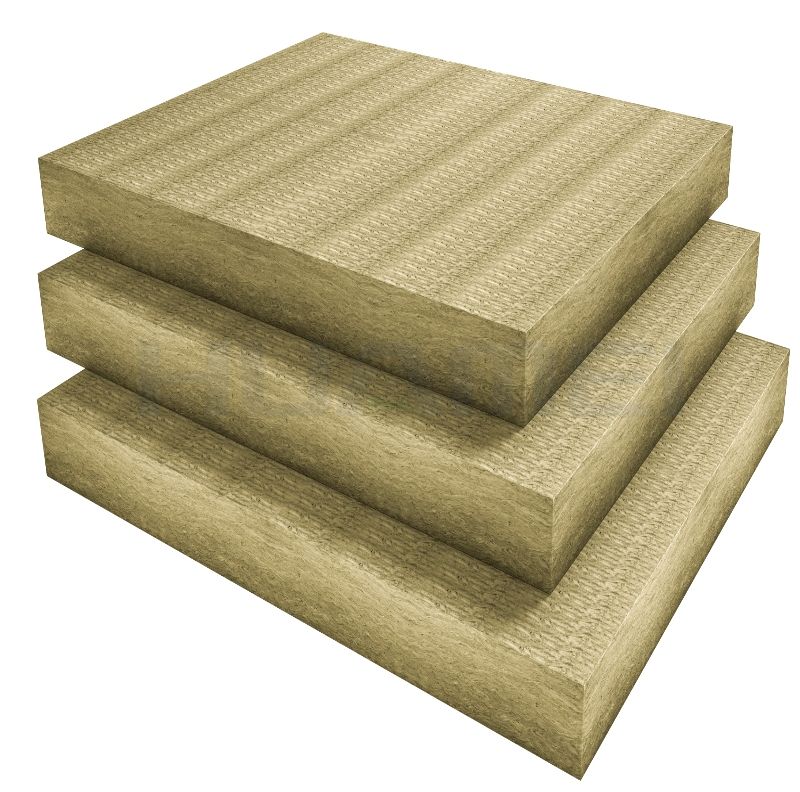
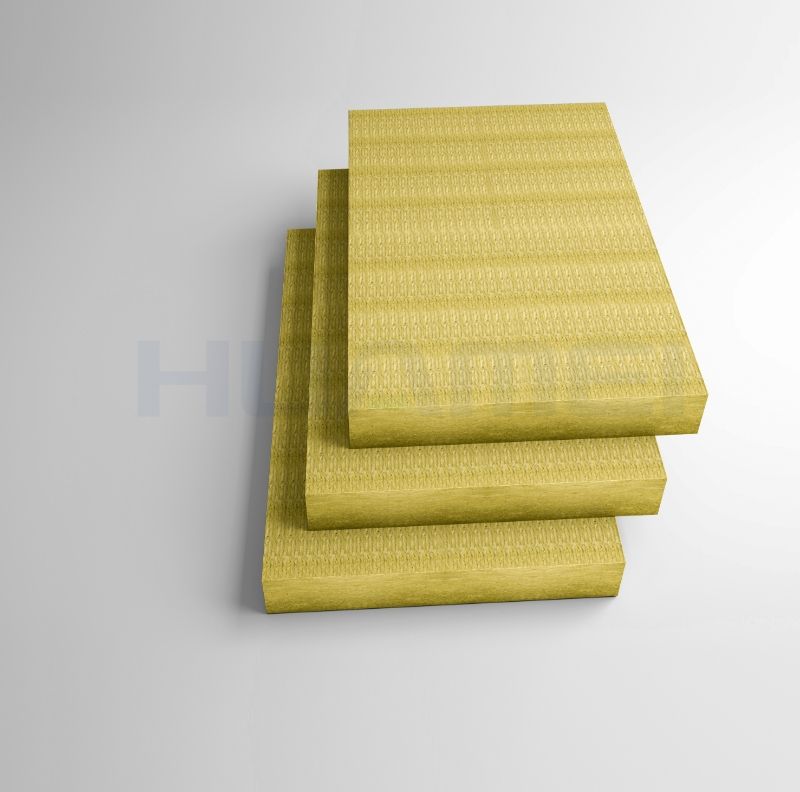
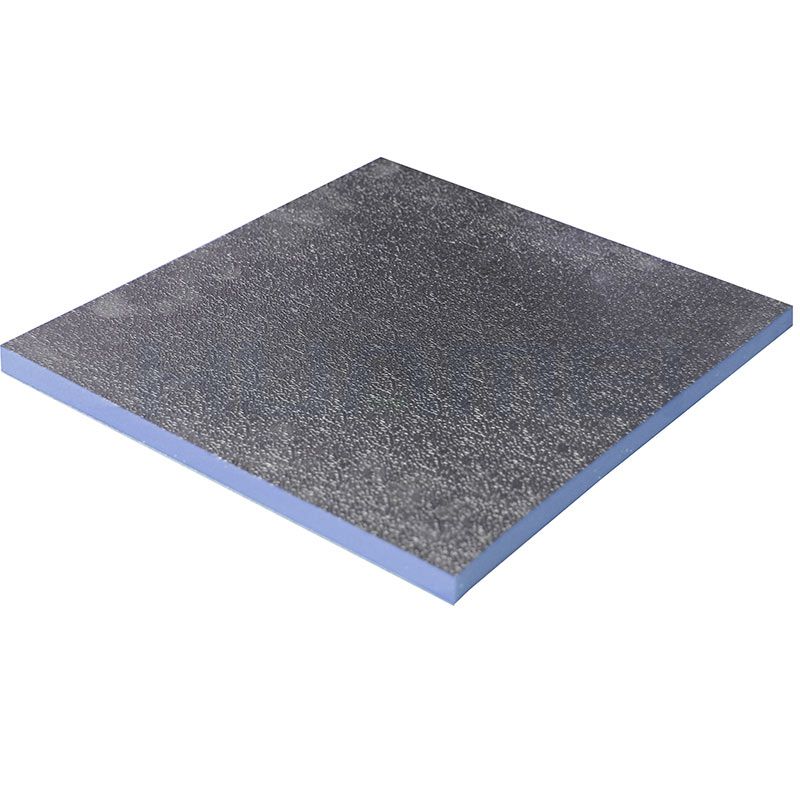
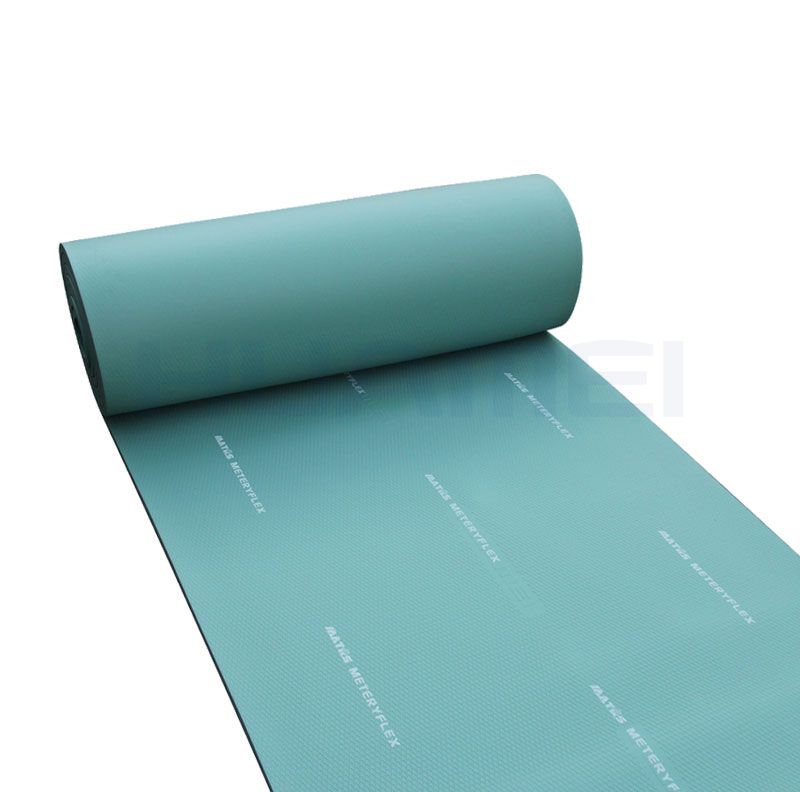
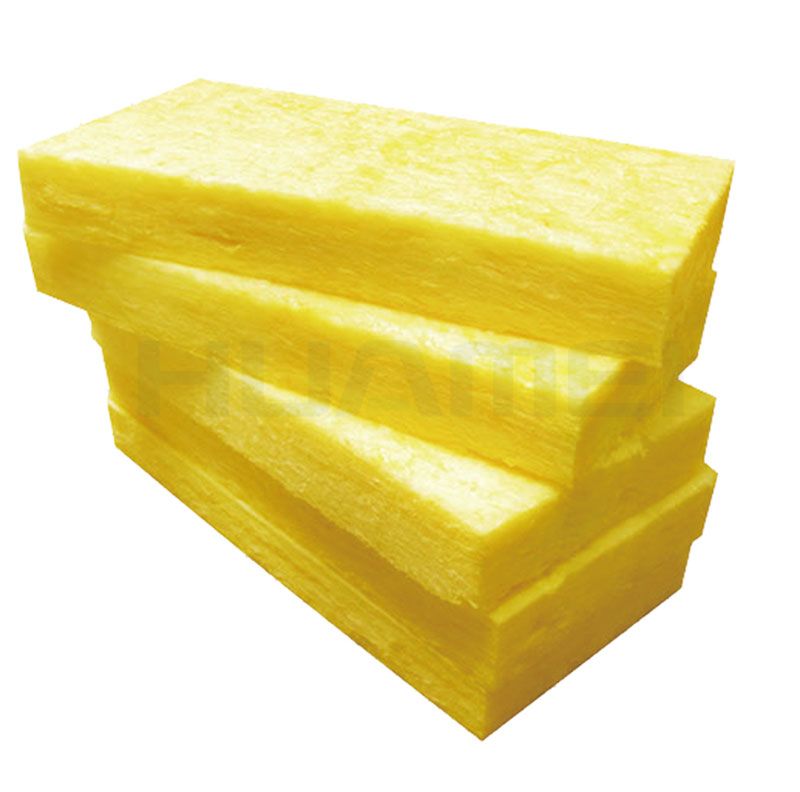
Modern greenhouse insulation materials may include closed-cell foam insulation, waterproof insulation quilts, reflective films, insulated wall panels, and thermal break materials. These materials help reduce conductive heat loss, air leakage, moisture-related performance decline, and night-time temperature drops.
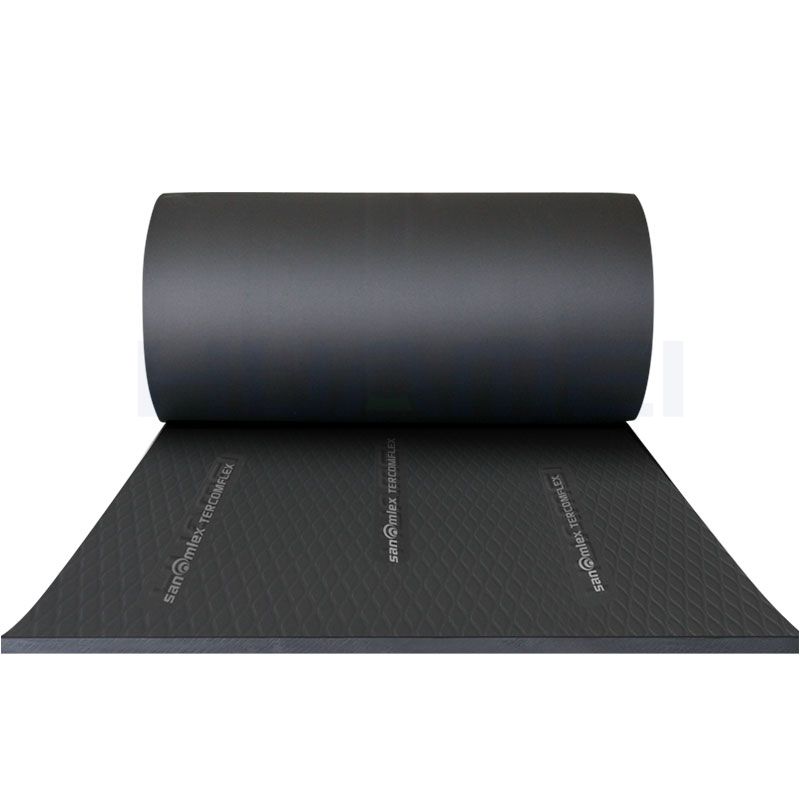
Closed-cell foam insulation is especially valuable in a passive solar greenhouse because it can combine low thermal conductivity, moisture resistance, flexibility, and long-term insulation stability. When used in wall systems or insulation quilts, it helps the greenhouse retain solar heat more efficiently.
A waterproof insulation quilt is another important part of passive greenhouse heating. During the day, the transparent surface collects sunlight. At night, the insulation quilt can cover the heat-loss surface and reduce radiation and convection losses. If the quilt has a reflective inner surface, it can also help reflect thermal radiation back into the greenhouse.
In some advanced systems, such as Huamei’s prefabricated solar greenhouse solution, high-performance insulation materials are used together with insulated walls and insulation quilts to improve the overall thermal efficiency of the greenhouse structure.
An insulated wall is one of the most important components of a passive solar greenhouse. The wall does not only separate indoor and outdoor space. It also controls how much heat is retained after sunset.
In traditional solar greenhouse design, thick walls are often used to absorb and release heat. However, thick walls may require more land, labor, construction time, and material cost. Modern prefabricated solar greenhouse structures often use engineered insulation systems to reduce wall thickness while maintaining thermal performance.
A well-designed insulated greenhouse wall should provide:
Low heat transfer
Good airtightness
Moisture resistance
Structural stability
Long-term durability
Easy installation
Compatibility with prefabricated construction
For a passive solar greenhouse, the rear wall and side walls should be designed as energy-saving parts of the system. They should prevent heat loss while supporting the heat storage and release process.
This is especially important in cold regions or in areas with large day-night temperature differences. The better the insulated wall performs, the less the greenhouse depends on external heating.
The transparent covering of a greenhouse is necessary for solar gain, but it is also one of the biggest sources of heat loss. This is where an insulation quilt becomes important.
In a passive solar greenhouse, the insulation quilt is usually used during the night or during very cold weather. Its function is to cover the transparent surface and reduce heat loss. When designed properly, it helps keep the stored solar heat inside the greenhouse.
A high-quality greenhouse insulation quilt should have strong thermal insulation, moisture resistance, weather resistance, and long service life. If the insulation core absorbs water, its thermal performance may decline. Therefore, waterproof or closed-cell insulation materials can be more suitable for long-term greenhouse use.
Some insulation quilts use reflective inner surfaces to reduce radiant heat loss. This design helps reflect heat back into the greenhouse, supporting passive greenhouse heating without electricity.
For a passive solar greenhouse, the insulation quilt is not just a cover. It is part of the heat management system. Without a reliable insulation quilt, the greenhouse may collect heat during the day but lose it too quickly at night.
A passive solar greenhouse needs thermal mass to store heat. Thermal mass refers to materials that can absorb heat when the temperature is high and release heat when the temperature is low.
Common thermal mass materials include water, soil, stone, concrete, brick, and special heat storage systems. In modern solar greenhouse structure design, thermal mass may also be combined with air ducts, underground heat exchange, or water circulation systems.
The goal of heat storage is to reduce temperature fluctuation. During sunny hours, excess heat is stored instead of wasted. During cold hours, stored heat is released back into the greenhouse environment.
In a passive solar greenhouse, heat storage should be planned together with insulation. Heat storage alone is not enough. If the greenhouse is poorly insulated, stored heat will still escape quickly. Likewise, insulation alone is not enough. If the greenhouse has no heat storage, indoor temperatures may still rise and fall sharply.
This is why the best passive solar greenhouse design combines insulation materials, airtight structure, and thermal mass into one system.
Air-soil heat exchange is an important design idea for advanced passive solar greenhouse systems. The basic principle is to use soil as a heat storage medium.
During the day, warm air inside the greenhouse can transfer heat into the soil or underground heat storage layer. At night, the stored heat can help stabilize the greenhouse temperature. This process supports greenhouse heating without electricity or with very low auxiliary energy demand.
An air-soil heat exchange system may include buried ducts, airflow channels, or underground heat storage zones. In fully passive designs, natural temperature differences and airflow paths can support heat movement. In more advanced low-energy systems, controlled airflow may be used to improve heat transfer efficiency.
For a passive solar greenhouse, the soil layer is not only a floor or foundation element. It can become part of the heat storage structure. When combined with high-performance greenhouse insulation materials, air-soil heat exchange can improve the greenhouse’s ability to handle cold nights and cloudy periods.
A modern passive solar greenhouse can also include a solar heat collection and heat release system. This type of system is designed to capture excess heat during sunny periods and release it when needed.
In simple structures, the greenhouse itself acts as the solar collector. Sunlight enters, surfaces warm up, and thermal mass stores heat. In more advanced prefabricated solar greenhouse structures, the heat collection system may include water-based storage, wall heat storage, or air circulation channels.
The key is not to depend on electric resistance heating. Instead, the system uses the sun as the heat source and uses the greenhouse structure to manage the heat.
This is why a passive solar greenhouse is different from a greenhouse with a heater. A heater adds energy from outside. A passive solar greenhouse improves how solar energy is captured, stored, protected, and reused.
For greenhouse heating without electricity, this structural approach is usually more sustainable and cost-effective over the long term.
Airtightness is often overlooked, but it is essential for a passive solar greenhouse. Even if the greenhouse has good insulation materials, air leakage can still carry warm air outside and bring cold air inside.
Common leakage areas include door gaps, roof joints, wall connections, window edges, vent frames, and covering overlaps. In a prefabricated solar greenhouse, modular joints must be carefully designed and sealed to prevent heat loss.
Good sealing performance helps the greenhouse maintain stable indoor conditions. It also improves the effectiveness of insulation walls, insulation quilts, and heat storage systems.
For greenhouse heating without electricity, every detail matters. A small gap may seem unimportant, but repeated air leakage can reduce the performance of the entire passive greenhouse heating system.
Therefore, a high-quality passive solar greenhouse should be designed with both insulation and airtightness in mind.
Moisture resistance is another important requirement for greenhouse insulation materials. A greenhouse environment often contains high humidity, condensation, and repeated temperature changes. If insulation materials absorb moisture, they may lose thermal performance and become less durable.
In a passive solar greenhouse, insulation materials should resist water absorption and maintain stable insulation performance over time. Closed-cell foam materials, waterproof insulation quilts, and sealed wall systems can help protect the greenhouse from moisture-related heat loss.
Waterproofing is also important for the foundation, wall base, and external insulation layer. If moisture enters the insulation system, the greenhouse may become less energy efficient and more difficult to maintain.
For this reason, greenhouse thermal insulation should not be evaluated only by initial thermal conductivity. Long-term performance, water resistance, aging resistance, and installation quality are equally important.
A prefabricated solar greenhouse is a modern approach to passive solar greenhouse construction. Instead of relying entirely on on-site masonry or traditional earth-wall methods, prefabricated structures use factory-made components that can be assembled more efficiently.
Typical prefabricated greenhouse components may include steel frames, trusses, insulated wall panels, insulation quilts, connectors, foundation elements, and sealing parts. This method can help improve construction consistency and shorten installation time.
For a passive solar greenhouse, prefabrication also makes it easier to control material quality. Insulation thickness, panel connection, waterproof layers, and structural details can be designed in advance.
A prefabricated solar greenhouse can be especially useful for projects that require repeatable construction quality, faster installation, lower labor intensity, and better thermal performance.
However, the success of a prefabricated solar greenhouse still depends on proper design. The structure must match local climate conditions, sunlight direction, wind load, snow load, and thermal requirements.
The materials used in a passive solar greenhouse directly affect its ability to heat without electricity. A good material system should support four functions: solar collection, heat storage, thermal insulation, and structural durability.
Important greenhouse materials may include:
Transparent covering materials for solar gain
Steel or aluminum frame systems for structural support
High-performance insulation materials for walls and quilts
Closed-cell foam insulation for thermal resistance and moisture protection
Reflective films for reducing radiant heat loss
Waterproof layers for long-term durability
Thermal mass materials for heat storage
Sealing tapes and joint materials for airtightness
Foundation materials that reduce cold bridging
The best passive solar greenhouse does not depend on one material alone. It depends on the correct combination of materials. A greenhouse with excellent glazing but poor insulation may still lose heat quickly. A greenhouse with thick insulation but poor solar gain may not collect enough heat. A greenhouse with heat storage but poor sealing may waste stored energy.
Therefore, material selection should always be connected to the overall greenhouse heating strategy.
Traditional greenhouse heating often depends on electric heaters, gas heaters, coal-fired systems, or other active heating equipment. These systems can raise indoor temperature quickly, but they also increase operating costs and energy dependence.
A passive solar greenhouse takes a different approach. It reduces the need for external heating by improving the greenhouse structure itself.
The difference can be summarized as follows:
A traditional heated greenhouse asks: “How much heat should be added?”
A passive solar greenhouse asks: “How can solar heat be captured, stored, and retained more efficiently?”
This difference is important. When the greenhouse structure is not designed for heat retention, any heating method becomes less efficient. But when the structure includes strong insulation, thermal mass, airtight joints, and heat storage design, the greenhouse becomes naturally more energy efficient.
For users asking how to heat a greenhouse without electricity, the passive solar greenhouse approach is usually the most logical starting point.
So, how can I heat my greenhouse without electricity? The most effective answer is to build the greenhouse as a complete passive solar heating system.
A passive solar greenhouse uses sunlight as the heat source, greenhouse insulation materials as the heat protection layer, thermal mass as the heat storage medium, and airtight construction as the heat retention barrier. When these elements are combined, the greenhouse can reduce dependence on electric heating and maintain a more stable indoor environment.
The structure matters. The materials matter. The insulation wall, insulation quilt, solar heat collection design, air-soil heat exchange, waterproof performance, and sealing details all affect the result.
For modern greenhouse projects, a passive solar greenhouse is not simply a transparent building. It is an integrated energy-saving structure designed to collect, store, and retain solar heat. With the right structural design and high-performance insulation materials, greenhouse heating without electricity becomes a practical and reliable solution.
Q:How does a passive solar greenhouse heat without electricity?
A:A passive solar greenhouse heats without electricity by collecting solar heat during the day, storing it in thermal mass, reducing heat loss through insulation materials, and releasing stored heat when temperatures drop.
Q:What is the most important material in a passive solar greenhouse?
A:The most important materials include greenhouse insulation materials, thermal mass materials, transparent covering materials, airtight sealing materials, and waterproof insulation quilts. High-performance insulation materials are especially important for reducing night-time heat loss.
Q:Why is insulation important in greenhouse heating without electricity?
A:Insulation is important because it keeps collected solar heat inside the greenhouse. Without good greenhouse thermal insulation, solar heat can escape quickly after sunset.
Q:Can an insulation quilt improve passive greenhouse heating?
A:Yes. An insulation quilt can reduce heat loss through the transparent surface at night. In a passive solar greenhouse, a high-quality insulation quilt is an important part of the heat retention system.
Q:What is the role of thermal mass in a passive solar greenhouse?
A:Thermal mass stores heat during sunny periods and releases it when the temperature drops. It helps reduce temperature fluctuation and supports passive greenhouse heating.
Q:Is a prefabricated solar greenhouse suitable for passive solar heating?
A:Yes. A prefabricated solar greenhouse can be suitable for passive solar heating if it includes proper orientation, high-performance insulation materials, airtight joints, thermal mass, and a reliable insulation quilt system.
Contact Us
Insulation solutions LIST
Huamei Air Conditioning Energy Saving System SolutionHow to Choose Insulation for Roof SystemsClass 1 Rubber Foam ApplicationWhere to Buy XPS Panels?Huamei Class 0 Rubber FoamColorful Rubber Foam ApplicationHVAC Insulation Material Comparison: Choosing the Best Solution for Your SystemChoose the right rubber foam for youSound Absorbing Foam: Enhancing Acoustics and Noise ControlPolystyrene roof InsulationRubber Foam InsulationSound Absorbing FoamInsulation Solutions:A Comprehensive Guide to InsulationCan EPDM Rubber Foam Be Customized?China Rubber Foam Supplier - Why choose us?Green Foam Board InsulationPassive Solar Greenhouse: How to Heat a Greenhouse Without ElectricityThermal Insulation Solutions for Steel Structure BuildingsHVAC InsulationDoes Cryogenic Rubber Foam Resist Condensation and Moisture?Formaldehyde Free Insulation ManufacturerCryogenic Rubber Foam SupplierConcrete Roof Thermal Insulation BoardsColorful Rubber Foam ProductsColorful Rubber Foam vs EVA Foam: Material and Performance ComparisonHow to Improve the Durability and Appearance of Colorful Rubber FoamEPDM Rubber Foam ManufacturerRubber Foam RollsGlass Wool PipeThe Cheapest Insulated Shed – Affordable and High-Quality SolutionsPassive Solar Greenhouse vs Active Solar GreenhouseRubber Foam ManufacturerPerformance of Colorful Rubber Foam under High and Low TemperaturesHuamei Sound Insulation SolutionsGlass Wool SupplierRubber foam tubeGlass Wool Pipe for SaleFoil-clad Glass Wool SuppliersHigh-temperature Insulation glass wool applianceTop 10 Soundproofing Insulation Materials: Comparing Effectiveness and CostAcoustic Cotton Supplier: Why Huamei is the Ideal ChoiceClass 1 Rubber Foam manufacturerHow To Choose The Right Rock Wool Insulation For Your ProjectGlass wool InsulationCopyright © Huamei Energy-saving Technology Group Co., Ltd. All Rights Reserved | Sitemap | Privacy Policy
Insulation solutions LIST: Insulation solutions LIST