E-mail: marketing@hbhuamei.com
Colorful rubber foam application is no longer limited to simple decorative products. Today, manufacturers, designers, and product developers use colorful rubber foam in a wide range of industries because it combines lightweight performance, cushioning, resilience, flexibility, insulation, and durability with the added value of color. In practical terms, this means the material does more than protect or support. It can also improve product appearance, strengthen branding, help identify different grades or zones, create a better user experience, and make spaces or products more visually attractive.
In many industries, color is not just an aesthetic decision. It has a direct functional purpose. A brightly colored foam floor can divide training zones in a gym. A colored foam insert in a carrying case can organize tools and improve presentation. A marine foam pad with a visible, high-contrast color can support product recognition and outdoor styling. In medical and rehabilitation products, softer color choices can make equipment look less intimidating while still delivering comfort and support.
This is why colorful rubber foam application has become an important topic for companies involved in sports products, footwear, healthcare, industrial manufacturing, automotive interiors, architectural decoration, marine leisure goods, and protective packaging. The right foam material must still match the technical demands of the end use, but color adds commercial and practical value that standard black or neutral foam often cannot provide.
The popularity of colorful rubber foam application comes from the fact that one material can solve several needs at the same time.
First, rubber foam and related technical foam materials can offer cushioning, shock absorption, softness, light weight, flexibility, and long-term resilience.
Second, many grades are easy to cut, laminate, thermoform, mold, bond, or convert into finished parts.
Third, color gives manufacturers a powerful tool for differentiation. It helps products stand out visually, supports market positioning, and allows designers to create more attractive finished goods.
Another reason colorful rubber foam application is growing is that many modern products are judged by both performance and appearance. A product that works well but looks ordinary may be less competitive than one that delivers the same function with stronger visual appeal. Foam materials used in sports, children’s environments, consumer goods, packaging, and interiors often benefit from bright, clean, and customizable colors because end users respond strongly to design. In other words, colorful foam is often chosen because it supports both engineering and emotional value.
Below are eight of the most important colorful rubber foam application scenarios, together with practical examples that show how the material is used in real products and spaces.
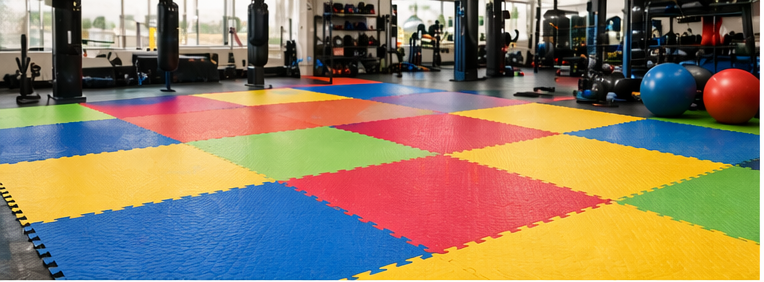
One of the best-known examples of colorful rubber foam application is in sports and fitness. Foam materials are widely used in gym mats, interlocking floor tiles, protective padding, training aids, exercise mats, and sports accessories because they are lightweight, resilient, and capable of absorbing repeated impact. When color is added, the same functional product becomes more engaging and more useful.
In a gym or martial arts studio, colorful interlocking foam mats can define training zones, stretching areas, sparring spaces, or children’s activity corners. In home fitness settings, colorful foam pads can make a space feel more modern and energetic instead of purely technical. In dance studios and children’s exercise programs, multi-color foam flooring can also help guide movement or separate age-based activity areas.
A practical example is a children’s gymnastics club that uses blue, yellow, red, and green foam tiles across the floor. The foam cushions jumps, tumbling, and floor work, while the color layout helps instructors organize different training exercises. Another example is a boxing or MMA gym where red-and-black foam panels are used to create a strong brand identity while still delivering necessary floor protection.
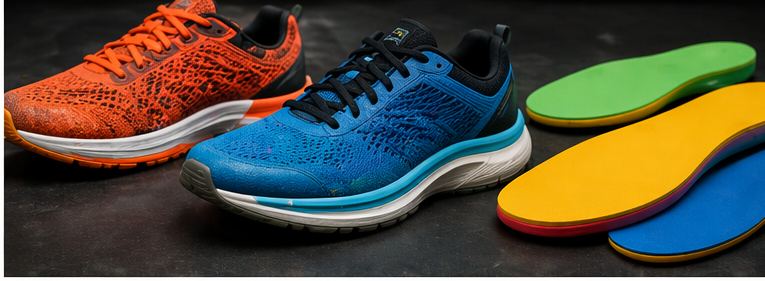
Another major colorful rubber foam application is in footwear. Foam materials are used in insoles, midsoles, heel pads, arch supports, sandal footbeds, and comfort inserts because they provide cushioning, rebound, softness, and support. In shoes, color has a particularly strong value because it becomes part of the product’s identity.
For sports shoes, brands often use color-coded foam inserts to highlight energy return, stability, or comfort technologies. In fashion footwear, colorful foam layers can improve visual design while keeping the product lightweight and comfortable. In sandals and slippers, soft foam footbeds in bright or pastel colors can make a simple product feel more premium and more consumer-friendly.
A clear example is a performance running shoe with a bright-colored foam midsole that visually communicates softness and rebound. Another example is a custom orthopedic sandal that uses layered colored foam to distinguish support zones in the heel, arch, and forefoot. In both cases, the colorful rubber foam application is doing more than adding style. It helps present the product’s function in a way customers can immediately understand.
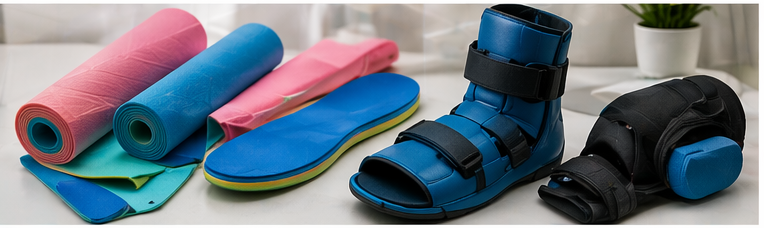
Colorful rubber foam application is also important in healthcare and rehabilitation, especially in products that must be comfortable, soft, and easy for patients to accept. Foam materials are used in orthotic supports, prosthetic liners, rehabilitation aids, positioning pads, wearable supports, collars, braces, and protective patient-contact components.
In this field, color can make a meaningful difference. Pediatric products often benefit from bright, friendly tones that make devices feel less clinical. Rehabilitation clinics may use different foam colors to identify sizes, densities, or support levels. Workshops that build custom orthotics may also use color as a practical way to separate material grades during fabrication.
For example, a rehabilitation center may use soft blue and green foam pads for positioning and support during treatment sessions. A pediatric orthotic product may use skin-friendly foam with a gentle color palette to make the device less stressful for young patients. A custom insole workshop may use multiple foam colors to show layered support structures inside the finished product.
This colorful rubber foam application is valuable because comfort, appearance, and emotional response are all important in medical products. A support device that feels safer and more approachable is often easier for patients to use consistently.
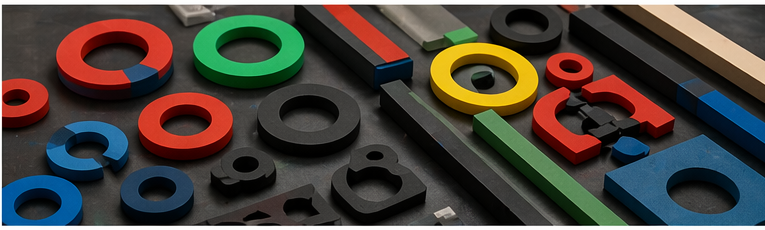
In industrial production, colorful rubber foam application often serves a practical identification purpose. Foam sheets, strips, washers, rings, seals, gasket components, and cut parts are used in machinery, appliances, HVAC accessories, electronics, and equipment assemblies. These parts may need to provide sealing, cushioning, spacing, vibration control, or protective separation.
When different grades are manufactured in different colors, the production process becomes easier to manage. Operators can quickly distinguish one hardness level from another. Maintenance staff can identify service parts more easily. Assembly errors are reduced because the visual difference between parts is obvious even before labels are checked.
A good example is a factory that uses colored foam sealing strips for different enclosure types. Green may represent one thickness, blue another, and red a higher-density version. Another example is a set of converted foam rings and pads used in HVAC assemblies, where different colors help workers match the correct parts to the correct installation points.
This colorful rubber foam application is less visible to consumers, but it is extremely useful for manufacturing efficiency, quality control, and part recognition.
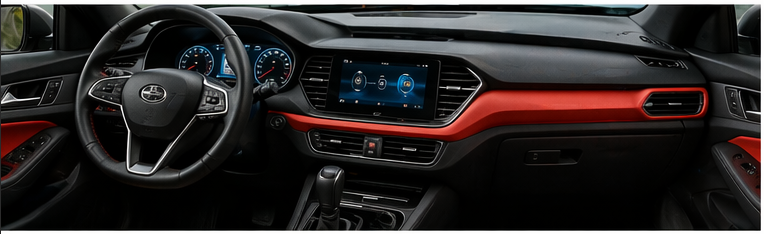
Automotive and transport products are another strong area for colorful rubber foam application. Foam materials are widely used for comfort, acoustic control, thermal insulation, interior padding, trim support, and lightweight components. When color is added, designers can create a more premium or more customized visual effect.
In passenger vehicles, foam-backed panels may be used behind decorative trims, armrests, soft-touch areas, or interior inserts. In buses, vans, recreational vehicles, and specialty transport products, colored foam can be used for comfort panels, storage liners, sleeping modules, or branded interior accents. The material helps reduce vibration and improve comfort, while the color improves design consistency.
A practical example is a customized camper van with grey interior panels and blue foam-backed accents around seating and storage zones. Another example is a commercial vehicle with red and black foam trim details used to reinforce brand styling in the cabin. In premium applications, colorful foam can be laminated with fabrics or other skins so that the final product feels more sophisticated.
In this colorful rubber foam application, the foam helps deliver quietness, comfort, and lightweight performance, while color helps create a memorable interior.
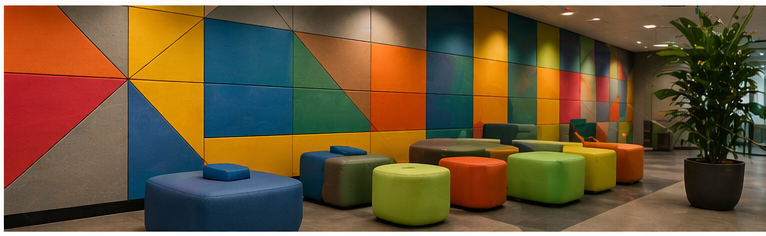
A fast-growing colorful rubber foam application can be found in architecture and interior decoration. Foam materials are used in wall panels, padded corners, acoustic surfaces, decorative features, child-safe spaces, exhibition environments, and flexible interior partitions. They are especially valuable where designers want to combine soft protection with strong visual identity.
Schools, play centers, offices, clinics, family entertainment areas, and public spaces often benefit from foam-based decorative surfaces because they reduce impact risk, improve acoustic comfort, and transform the mood of the environment. Large color blocks, geometric arrangements, and branded wall systems can all be created using colored foam materials.
For example, a children’s indoor activity center may use padded foam wall panels in yellow, orange, blue, and green to create a safe but exciting environment. An office collaboration area may use more muted foam panels in brand colors to add acoustic softness and visual warmth. A hospital corridor or therapy room may use friendly, color-coded wall protection to balance safety and atmosphere.
This colorful rubber foam application is especially attractive because it combines protection, design, and spatial identity in one solution.
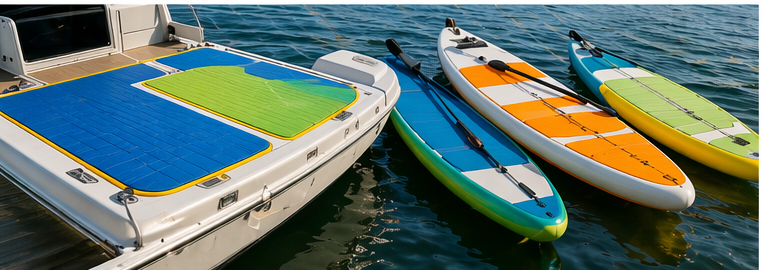
Outdoor leisure is another area where colorful rubber foam application performs extremely well. Closed-cell foam materials are commonly used in water sports accessories, boat decking, flotation-related products, paddle sports, outdoor seating pads, and marine comfort surfaces because they can provide cushioning, grip, and outdoor usability.
Color plays a major role in these products. It improves visual appeal, supports product branding, and helps create a premium lifestyle image. In some cases, brighter colors also improve visibility. For outdoor and marine products, design is often just as important as function because customers expect products to look modern, clean, and distinctive.
A clear example is a boat deck fitted with textured colored foam pads that improve comfort underfoot and enhance the appearance of the vessel. Another example is a paddle board or floating leisure platform with foam traction zones in bold contrasting colors. Foam mats used for camping or outdoor seating may also use bright colors to appeal to leisure consumers.
In this colorful rubber foam application, the material must perform well under outdoor conditions while still looking attractive over time.
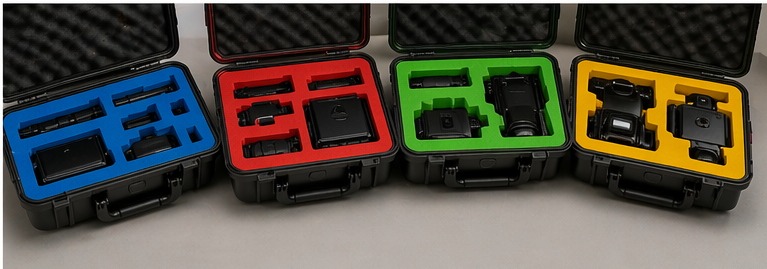
Packaging is one of the most commercially effective colorful rubber foam application scenarios. Foam inserts are widely used to protect electronics, tools, instruments, glass items, luxury products, and fragile components during transport and storage. When the foam is colored, the insert becomes both protective and visually impressive.
A colored foam insert can turn an ordinary carrying case into a premium presentation system. It can also help organize contents by color zone, guide users to the correct compartments, and create a much more professional first impression. This is especially useful in sales kits, photography equipment cases, instrument packaging, sample boxes, and branded tool kits.
For example, a black case with blue and red precision-cut foam inserts can hold cameras, lenses, batteries, and accessories in clearly defined compartments. A premium gift set may use soft foam in a custom brand color to protect the product while making the unboxing experience more memorable. An industrial service case may use multiple foam colors to separate tools, replacement parts, and test devices.
This colorful rubber foam application is popular because it merges protection, organization, and brand storytelling in a single package.
Choosing the right material for colorful rubber foam application depends on more than color alone. The first question is always the function. Does the foam need to cushion impact, provide comfort, seal a gap, reduce vibration, support hygiene, improve grip, or protect a product during shipping? Once the physical purpose is clear, it becomes easier to evaluate density, softness, resilience, compression performance, durability, and environmental suitability.
The next question is where the foam will be used. Indoor products may prioritize appearance, comfort, and easy fabrication. Outdoor products need better resistance to weathering, UV exposure, and moisture. Medical-related uses may require cleanability and skin-friendly performance. Automotive and industrial applications may need stronger mechanical properties or more precise dimensional consistency.
Then comes the role of color. In some applications, color is mainly decorative. In others, it serves branding, zoning, coding, or user guidance. A well-designed foam product usually treats color as a functional design tool rather than an afterthought.
For the best results, manufacturers should think about the foam material, the conversion process, the final environment, and the visual goal together. That is the most effective approach to any colorful rubber foam application project.
Colorful rubber foam application continues to grow because it gives manufacturers and designers the chance to combine performance and appearance in one material solution. From sports flooring and performance footwear to medical supports, industrial seals, transport interiors, architecture, marine leisure products, and premium packaging, colorful foam offers clear advantages that go far beyond surface style.
The foam itself provides cushioning, flexibility, resilience, comfort, protection, and processability. The color adds branding power, visual organization, user appeal, and stronger market differentiation. When those benefits are combined correctly, the result is a product or space that works better, looks better, and creates a more memorable experience for the end user.
For companies developing modern foam-based products, colorful rubber foam application is not a niche trend. It is a practical and commercially valuable direction that can improve both technical performance and design impact.
Colorful rubber foam is used for sports mats, footwear components, medical supports, industrial gaskets, vehicle interiors, decorative wall panels, marine leisure products, and protective packaging inserts.
Colorful rubber foam can provide the same core functional benefits as many standard foam materials while adding branding, zoning, product differentiation, and stronger visual appeal.
No. In many cases, color also serves practical purposes such as part identification, safety zoning, product organization, and easier user recognition.
Yes, suitable foam grades can be used outdoors in marine, leisure, and exterior applications, but the material should be selected according to UV, moisture, and weather exposure requirements.
Yes. It is widely used in protective inserts for electronics, tools, instruments, premium gift boxes, and transport cases because it combines cushioning with premium presentation.
Yes, suitable medical-grade or skin-friendly foam grades are used in orthotics, prosthetics, braces, rehabilitation supports, and patient-contact devices.
Sports and leisure, footwear, healthcare, industrial manufacturing, automotive, architecture, marine products, and premium packaging are among the most common industries.
Start by defining the performance requirement, environment, conversion method, and design goal. Then match density, softness, resilience, durability, and color options to the final application.
Contact Us
Insulation solutions LIST
XPS vs Rock Wool: Different Applications and UsesChoose the right rubber foam for youClass 1 Rubber Foam manufacturerHVAC InsulationSound Absorbing Foam: Enhancing Acoustics and Noise ControlRubber Foam InsulationHuamei Air Conditioning Energy Saving System SolutionFoil-clad Glass Wool SuppliersRubber Foam ManufacturerHow to Prevent Condensation on Cold Water Pipes?How to Choose Insulation for Roof SystemsHuamei Sound Insulation SolutionsCryogenic Rubber Foam SupplierGlass Wool Pipe for SaleThe Cheapest Insulated Shed – Affordable and High-Quality SolutionsSound Absorbing FoamHow To Choose The Right Rock Wool Insulation For Your ProjectInsulation Solutions:A Comprehensive Guide to InsulationWhere to Buy XPS Panels?XPS Insulation for Cold Storage FloorsHow to Choose Foil-clad Rubber Foam for Your ProjectThermal Insulation Solutions for Steel Structure BuildingsColorful Rubber Foam ProductsDoes Cryogenic Rubber Foam Resist Condensation and Moisture?Formaldehyde Free Insulation ManufacturerConcrete Roof Thermal Insulation BoardsGreen Foam Board InsulationEPDM Rubber Foam ManufacturerHVAC Insulation Material Comparison: Choosing the Best Solution for Your SystemPassive Solar Greenhouse vs Active Solar GreenhouseGlass wool InsulationPolystyrene roof InsulationRubber Foam RollsChina Rubber Foam Supplier - Why choose us?Huamei Class 0 Rubber FoamColorful Rubber Foam ApplicationColorful Rubber Foam vs EVA Foam: Material and Performance ComparisonPerformance of Colorful Rubber Foam under High and Low TemperaturesTop 10 Soundproofing Insulation Materials: Comparing Effectiveness and CostHow to Improve the Durability and Appearance of Colorful Rubber FoamGlass Wool PipeHow glass wool insulation worksClass 1 Rubber Foam ApplicationRubber foam tubeCan EPDM Rubber Foam Be Customized?Copyright © Huamei Energy-saving Technology Group Co., Ltd. All Rights Reserved | Sitemap | Privacy Policy
Insulation solutions LIST: Insulation solutions LIST