E-mail: marketing@hbhuamei.com
When people search for class 1 rubber foam application, they usually want a practical answer: where can this material be used? why is it chosen over other insulation materials? and how is it actually installed in real systems?
In practice, Class 1 rubber foam is most widely used on HVAC pipework, refrigeration lines, air ducts, vessels, plumbing systems, industrial equipment, marine projects, solar lines, and selected transport applications because closed-cell elastomeric foam combines condensation control, thermal efficiency, moisture resistance, acoustic damping, flexibility, and a Class 1 surface spread of flame rating under BS 476 Part 7 in one insulation solution.
This article describe these uses for pipes, ducts, tanks, fittings, chilled water systems, refrigeration equipment, industrial plants, marine projects, solar installations, and automotive applications.
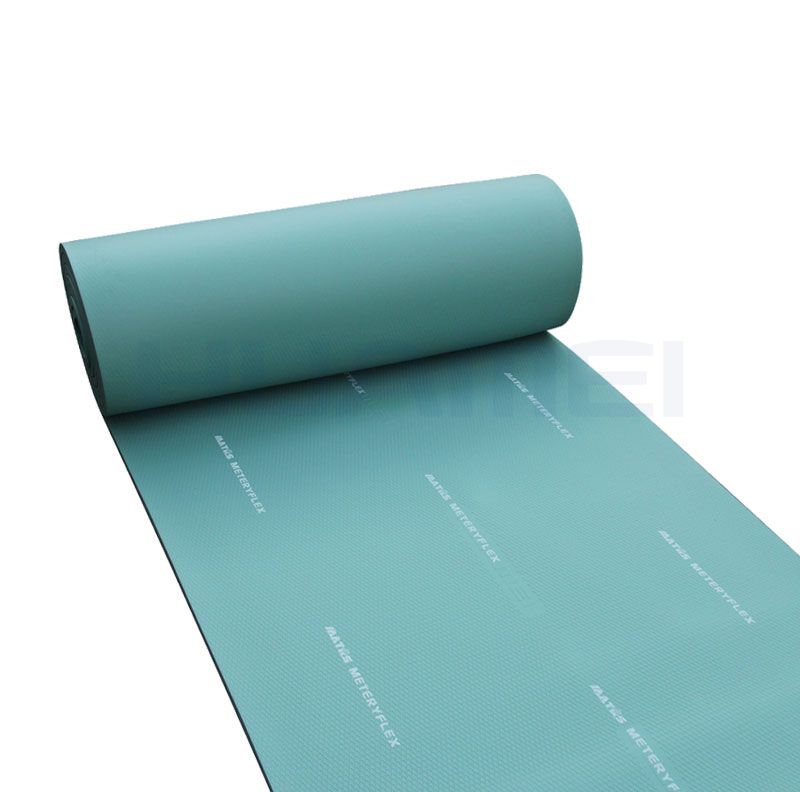
In the insulation industry, Class 1 rubber foam generally refers to a flexible closed-cell elastomeric foam insulation that achieves Class 1 surface spread of flame performance according to BS 476 Part 7. Many products in this category are based on synthetic rubber such as NBR or EPDM, and they are supplied as tubes, sheets, or rolls for insulating pipes, ducts, vessels, and equipment. The closed-cell structure is important because it reduces water vapour ingress, helps prevent condensation, and lowers the risk of corrosion under insulation in cold-service systems. Representative technical data from a Class 1 product also shows the material is engineered for pipes, air ducts, vessels, elbows, fittings, and flanges in air-conditioning, refrigeration, and process equipment.
That is why class 1 rubber foam application is not limited to one narrow industry. It is a cross-sector insulation solution. Wherever designers need to keep a line or surface temperature under control, stop sweating on cold systems, improve energy efficiency, reduce noise, and meet a recognized fire classification, Class 1 rubber foam becomes a practical choice. The material’s flexibility also makes it easier to fit around irregular shapes than many rigid insulation alternatives.
The main reason class 1 rubber foam application is so broad is that the material solves several problems at the same time.
First, it is highly effective for condensation control. Closed-cell elastomeric foam is widely described by technical manufacturers as one of the best choices for below-ambient systems where moisture on the outside of the insulation would otherwise lead to dripping, staining, corrosion, mould growth, or system inefficiency.
Second, it limits heat gain and heat loss, helping chilled and heated systems run more efficiently.
Third, it can provide sound attenuation and vibration damping, especially on pipes and ducts. Fourth, its flexibility improves workability on site, especially at bends, tees, valves, reducers, flanges, and supports. Finally, the Class 1 fire classification adds an important safety dimension for commercial and institutional projects.
From an application standpoint, this means a contractor can use one insulation family across multiple parts of a mechanical system instead of switching between several different materials. That consistency matters in design, procurement, installation, maintenance, and repair. It is one of the biggest reasons the search term class 1 rubber foam application is closely tied to HVAC and building services work.
The most common class 1 rubber foam application is HVAC pipe insulation. This includes chilled water lines, condenser water piping, hot water lines, fan coil connections, and VRF/VRV refrigerant piping. In these systems, the foam insulation is expected to do two jobs at once: hold the system temperature where it should be and stop condensation from forming on the outside surface when cold lines run through warm, humid air. Technical sources from Armacell, Kaimann, Isover, and Aeroflex all point to refrigeration piping, chilled water piping, and hot/cold water lines as core elastomeric foam applications.
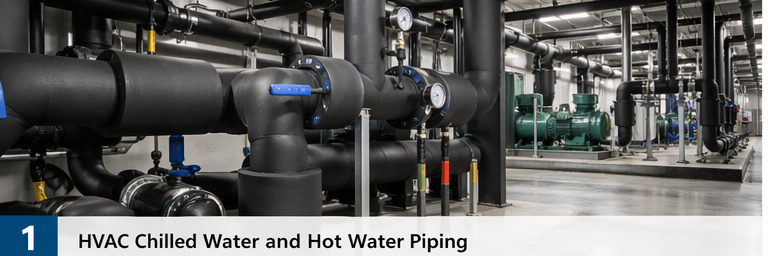
Imagine a commercial office tower with chilled-water pipes running from the chiller plant to air-handling units and fan coil units. In this case, preformed rubber foam tubes are installed over straight pipe runs. At elbows, tees, reducers, and valve stations, the installer fabricates shaped covers from tube or sheet material and seals all seams with adhesive. The purpose is not only insulation thickness, but also vapour-tight continuity. The ArmaFlex application manual specifically shows fabrication methods for 90° bends, tees, reducers, flanges, strainers, and valve bodies, and repeatedly emphasizes adhesive-sealed seams and correct fitting details for maintaining system integrity.
For an owner, the benefit is simple: when the chilled-water loop is insulated properly, there is less risk of sweating ceilings, wet insulation, pipe corrosion, and avoidable cooling losses. For a contractor, rubber foam is attractive because it can be installed on straight runs and then fabricated on-site around complex fittings without the brittleness common to more rigid products.
Another major class 1 rubber foam application is refrigeration insulation. This includes suction lines, liquid lines, cold-room pipework, display case refrigeration, supermarket systems, compressor rooms, and process cooling lines. Refrigeration is one of the harshest insulation environments because temperature differences are large and moisture control is critical. A small installation defect can allow vapour ingress, which can quickly reduce insulation performance and create long-term maintenance issues. Product literature consistently identifies refrigeration as a primary use category for closed-cell elastomeric foam.
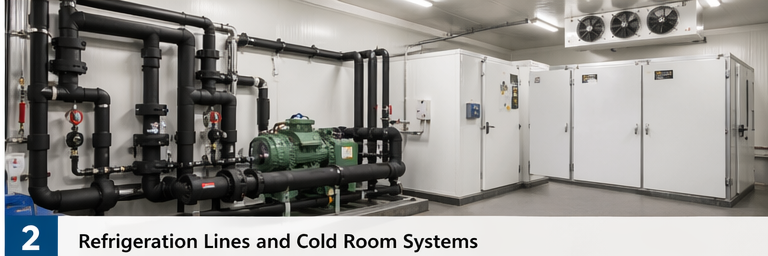
Consider a frozen-food warehouse with low-temperature suction lines leaving the evaporator and returning to compressors. Here, the insulation must resist moisture migration over time, especially around supports, joints, and service valves. Application manuals for elastomeric foam installation note the importance of sealing seams, treating fittings carefully, and creating proper vapour-tight transitions at interruptions. Where pipe supports or terminations are weak points, installers use correctly detailed support solutions and full adhesive coverage to maintain continuity and reduce the risk of condensation or corrosion under insulation.
This is why, in refrigeration projects, class 1 rubber foam application is not just about wrapping a cold pipe. It is about building a continuous thermal and vapour-control envelope around the entire cold-service system, including fittings and accessories.
A third high-value class 1 rubber foam application is duct insulation. Closed-cell rubber foam is widely used on supply ducts, return ducts, fresh-air ducts, plenums, terminal boxes, and air-handling units. In duct systems, the insulation helps reduce unwanted heat gain or loss while also preventing condensation on cold duct surfaces. Technical sources specifically list air ducts, interior and exterior duct systems, and HVAC equipment as standard applications.
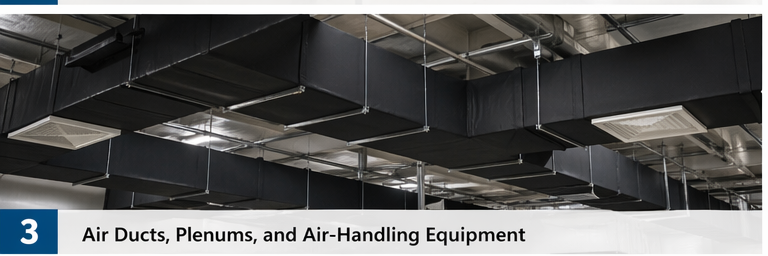
In a humid climate, a supply-air duct carrying cold air through a ceiling void can sweat if the outer metal surface falls below dew point. Rubber foam sheet insulation is cut to size, wrapped around the duct body, and bonded continuously over the surface. For larger flat surfaces or large diameters, application guidance recommends all-over adhesive coverage, and multi-layer installations should be staggered so that longitudinal seams and butt joints do not line up between layers. That detail improves both thermal continuity and vapour control.
For specifiers, this is a strong reason to consider class 1 rubber foam application on ducts in hotels, hospitals, shopping centres, data centres, laboratories, and office buildings. In many such spaces, moisture damage above ceilings is expensive and disruptive, so reliable condensation control becomes more valuable than nominal insulation thickness alone.
Beyond buildings, class 1 rubber foam application also extends into industrial insulation. Technical references explicitly list industrial plants, process equipment, vessels, pharmaceutical facilities, and food and beverage applications among the standard use cases for elastomeric foam insulation. This matters because industrial systems often combine strict temperature stability requirements with hygiene, washdown, or condensation concerns.
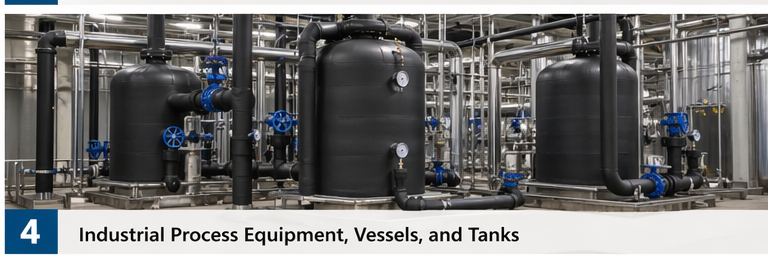
In a beverage or dairy plant, glycol or chilled-water loops may serve process cooling lines, fermentation vessels, or packaging areas. Straight pipe runs can be insulated with tubes, while larger pipes, tanks, and vessels are covered with flexible sheet material. The ArmaFlex application guidance states that larger pipes, ducts, and tanks should be insulated with sheet, and for very large diameters or underside areas, full adhesive coverage is required. In multi-layer systems, staggered joints are recommended to improve performance.
In this setting, the value of class 1 rubber foam application is practical: it helps keep cold process surfaces dry, supports process stability, and can be fabricated around nozzles, valves, access points, and vessel geometry more easily than rigid board products. That combination is particularly useful where plant layouts are dense and maintenance access still matters.
Many people focus only on HVAC, but another important class 1 rubber foam application is plumbing and service-water systems. Official sources mention warm and cold-water lines, plumbing, and even structure-borne noise reduction in service-water and waste-water installations. That means the material is not only for energy performance; it also has acoustic value in occupied buildings.
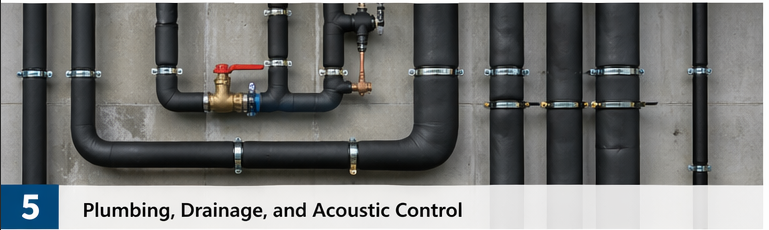
In hotels, apartments, and mixed-use buildings, service risers often contain cold-water lines, hot-water return piping, condensate drains, and sanitary stacks. Rubber foam can be used to reduce pipe sweating on cold lines and to dampen some structure-borne noise from water movement. In spaces where guest comfort matters, that dual thermal-and-acoustic role is especially useful. When fittings, branches, and valve stations are treated carefully with fabricated covers and sealed joints, the system remains tidy and serviceable.
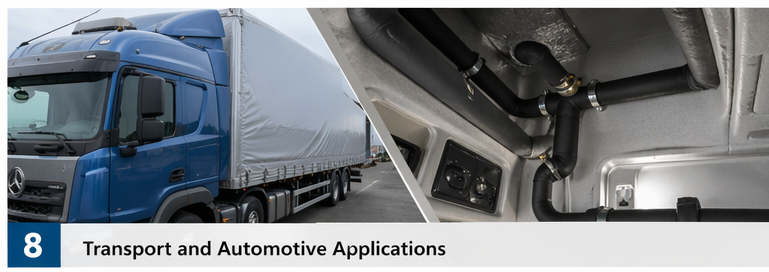
Technical references also identify marine and offshore insulation and automotive or transport applications as valid elastomeric foam use cases. That makes sense because these sectors value lightweight materials, flexibility, moisture resistance, vibration damping, and durability in demanding environments. Kaimann and Isover explicitly list marine, offshore, solar, and automotive uses, while transport-oriented foam references also point to soundproofing, vibration damping, and thermal insulation benefits for vehicles.
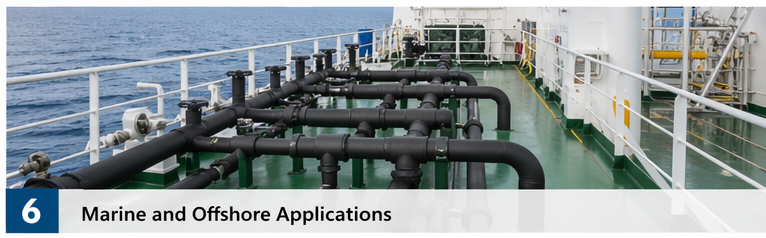
On a vessel or specialized transport unit, Class 1 rubber foam can be used on auxiliary chilled-water lines, HVAC ducting, and service pipework where both moisture control and vibration tolerance matter. In buses, trucks, and caravans, elastomeric foam is often selected for compact HVAC systems because it can fit into tight routing paths and curved spaces. This is another reason the term class 1 rubber foam application covers much more than commercial buildings alone.
A less discussed but still relevant class 1 rubber foam application is solar piping and outdoor system insulation. Kaimann and Isover list solar installations among typical applications, showing that elastomeric foam is used wherever thermal lines are exposed to outdoor conditions. However, outdoor use requires one important design note: at least one Class 1 product datasheet states that UV protection is required for outside use, and installed insulation should be protected soon after installation.
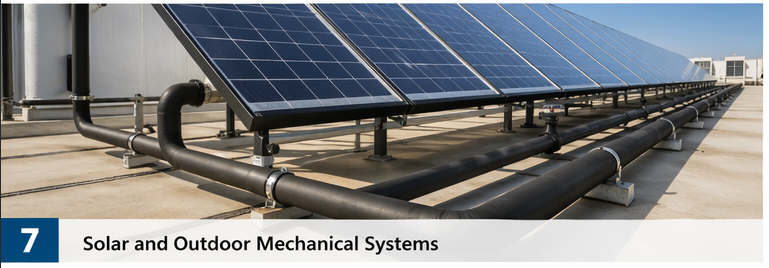
For rooftop solar thermal piping or exposed chilled-water branches, the rubber foam itself provides the thermal layer, but a protective finish such as a weather-resistant coating or cladding is often added to resist UV and weather exposure. In other words, class 1 rubber foam application outdoors is not just about selecting the foam; it is also about specifying the right external protection system so the insulation lasts.
No discussion of class 1 rubber foam application is complete without installation quality. In real projects, the difference between a high-performing system and a failing one often comes down to details.
Application manuals show that installers should clean pipe surfaces, align seams correctly, fabricate fittings carefully, and seal all joints with the appropriate adhesive. They also provide specific fabrication methods for elbows, tees, reducers, flanges, valves, and strainers. For larger pipes, ducts, tanks, and flat surfaces, sheet insulation and full-surface adhesive coverage may be required. In multi-layer work, joint staggering is recommended, and special attention is needed at supports, terminations, and interruptions because those are the places where condensation problems often begin.
This is why smart buyers do not evaluate class 1 rubber foam application by material alone. They also look at thickness selection, fitting fabrication, adhesive quality, vapour sealing, support treatment, and weather protection where relevant. Good material with poor detailing will not deliver the expected result.
The best way to understand class 1 rubber foam application is to see it as a system insulation solution, not just a foam product. Its strongest application areas are HVAC chilled water and hot water piping, refrigeration lines, cold rooms, air ducts, AHUs, vessels, process equipment, plumbing, drainage, marine systems, solar installations, and selected transport uses because closed-cell elastomeric foam handles the real problems those systems face: condensation, heat gain and loss, corrosion risk, noise, vibration, and installation complexity. Technical sources from major manufacturers and application manuals consistently support these use cases and show that the material is especially effective when it is installed as a continuous, well-sealed insulation envelope around straight runs, fittings, supports, and equipment surfaces.
So, if the question is where class 1 rubber foam application delivers the most value, the answer is clear: it performs best anywhere a project needs moisture control, thermal stability, fire-conscious specification, and flexible installation on complex mechanical systems. That is exactly why it remains one of the most practical insulation choices across commercial, industrial, and specialized mechanical applications.
Contact Us
Insulation solutions LIST
How to Improve the Durability and Appearance of Colorful Rubber FoamAcoustic Cotton Supplier: Why Huamei is the Ideal ChoiceXPS vs Rock Wool: Different Applications and UsesRubber foam tubeWhere to Buy XPS Panels?Can EPDM Rubber Foam Be Customized?Does Cryogenic Rubber Foam Resist Condensation and Moisture?Class 1 Rubber Foam manufacturerSound Absorbing Foam: Enhancing Acoustics and Noise ControlRubber Foam InsulationGlass Wool SupplierColorful Rubber Foam ProductsConcrete Roof Thermal Insulation BoardsGreen Foam Board InsulationGlass wool InsulationColorful Rubber Foam vs EVA Foam: Material and Performance ComparisonHuamei Class 0 Rubber FoamChoose the right rubber foam for youRubber Foam ManufacturerHigh-temperature Insulation glass wool appliancePolystyrene roof InsulationThermal Insulation Solutions for Steel Structure BuildingsHow glass wool insulation worksGlass Wool PipeHow To Choose The Right Rock Wool Insulation For Your ProjectInsulation Solutions:A Comprehensive Guide to InsulationChina Rubber Foam Supplier - Why choose us?Passive Solar Greenhouse: How to Heat a Greenhouse Without ElectricityHVAC InsulationHow to Choose Insulation for Roof SystemsPerformance of Colorful Rubber Foam under High and Low TemperaturesCryogenic Rubber Foam SupplierFoil-clad Glass Wool SuppliersPassive Solar Greenhouse vs Active Solar GreenhouseEPDM Rubber Foam ManufacturerRubber Foam RollsHuamei Air Conditioning Energy Saving System SolutionBest Materials for Insulation: A Practical ComparisonClass 1 Rubber Foam ApplicationHVAC Insulation Material Comparison: Choosing the Best Solution for Your SystemHow to Prevent Condensation on Cold Water Pipes?Huamei Sound Insulation SolutionsTop 10 Soundproofing Insulation Materials: Comparing Effectiveness and CostXPS Insulation for Cold Storage FloorsSound Absorbing FoamCopyright © Huamei Energy-saving Technology Group Co., Ltd. All Rights Reserved | Sitemap | Privacy Policy
Insulation solutions LIST: Insulation solutions LIST