E-mail: marketing@hbhuamei.com
Choosing Class 1 rubber foam is a smart decision because it offers several important advantages:
Strong fire performance for safer insulation applications
Low thermal conductivity to help reduce heat loss and improve energy efficiency
Closed-cell moisture resistance to protect long-term insulation performance
Effective condensation control for cold pipes, refrigeration lines, and HVAC systems
Flexible installation for pipes, valves, bends, and irregular surfaces
Long-term durability that helps reduce maintenance and replacement costs
Wide application suitability for HVAC, refrigeration, ductwork, piping, and industrial systems
In short, Class 1 rubber foam is more than a standard insulation material. It is a reliable solution for projects that require safety, efficiency, durability, and long-term performance.
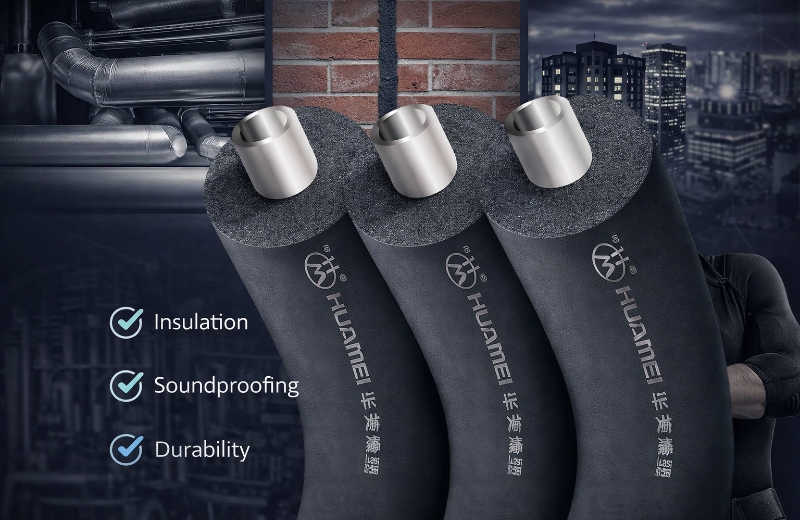
The real advantage of Class 1 rubber foam is that it is designed for practical, long-term insulation performance. In many projects, insulation must do more than simply cover a pipe or piece of equipment. It needs to reduce heat transfer, resist moisture, help control condensation, fit around complex shapes, and remain effective over time. That is where Class 1 rubber foam stands out.
Compared with lower-grade or less specialized insulation materials, Class 1 rubber foam provides a more complete performance profile. It combines thermal efficiency, closed-cell moisture resistance, flexibility, durability, and dependable fire performance in one material. That combination makes Class 1 rubber foam a strong option for chilled water pipes, refrigerant lines, duct systems, hot water pipes, and mechanical equipment.
One of the biggest reasons to choose Class 1 rubber foam is its fire performance. In commercial, industrial, and residential building services, insulation is not only about temperature control. It also plays a role in supporting safer system design.
Because Class 1 rubber foam is associated with low surface flame spread, it is often preferred in projects where fire safety is an important consideration. This makes Class 1 rubber foam a practical option for buyers and engineers who want insulation that contributes to a more safety-conscious specification.
For projects where compliance, risk reduction, and material reliability matter, Class 1 rubber foam offers greater confidence than ordinary insulation products.
Another important reason to choose Class 1 rubber foam is its excellent thermal insulation performance. A good insulation material should reduce both heat loss and heat gain, allowing the system to maintain the required temperature more efficiently. Class 1 rubber foam performs well in this area because it has low thermal conductivity.
This means Class 1 rubber foam can help reduce energy waste in heating and cooling systems. In air-conditioning, refrigeration, and chilled water applications, less thermal loss means the system can operate more efficiently and with greater stability. Over time, Class 1 rubber foam can contribute to lower energy consumption and improved overall system performance.
When long-term operating cost matters, Class 1 rubber foam becomes an even more attractive insulation choice.
Moisture is one of the main causes of insulation failure. Once water vapor enters many insulation materials, thermal performance drops, and the risk of corrosion, damage, and maintenance problems increases. That is why the closed-cell structure of Class 1 rubber foam is such an important benefit.
Because Class 1 rubber foam has a closed-cell construction, it helps resist water vapor penetration and supports long-term insulation stability. This is especially valuable in humid environments and cold-service systems where condensation is a constant concern.
Instead of allowing moisture to move easily into the insulation layer, Class 1 rubber foam helps form an effective barrier. As a result, Class 1 rubber foam not only protects thermal performance, but also helps protect the pipe or equipment underneath.
Condensation is a serious issue in cold systems. If insulation cannot control condensation properly, water droplets can form on the pipe surface, leading to corrosion, water damage, mold risk, and reduced system reliability. This is another area where Class 1 rubber foam performs very well.
Thanks to its low thermal conductivity and moisture-resistant closed-cell structure, Class 1 rubber foam helps maintain surface temperatures more effectively and reduce the chance of condensation forming. This makes Class 1 rubber foam especially suitable for chilled water systems, refrigeration lines, and air-conditioning equipment.
For projects where condensation control is critical, Class 1 rubber foam offers a practical and dependable solution.
Choosing insulation is not only about initial performance. It is also about how well the material performs after months or years of service. Class 1 rubber foam is widely valued because it is designed for lasting performance under real operating conditions.
A high-quality Class 1 rubber foam product typically offers good resistance to aging, ozone, environmental exposure, and everyday wear. These properties help the insulation remain stable over time, even in demanding mechanical environments.
This long-term reliability is one of the reasons why Class 1 rubber foam is often selected for both new construction and retrofit projects. It can help reduce the need for early replacement, frequent maintenance, and performance loss caused by moisture or environmental stress.
Installation efficiency is another major reason to choose Class 1 rubber foam. In real projects, insulation often needs to fit around bends, valves, tees, elbows, and other irregular surfaces. Rigid materials can be more difficult to handle in these situations, which may increase labor time and material waste.
Class 1 rubber foam is flexible, soft, and easy to cut and fit. It can wrap around complex pipework and equipment more smoothly, making installation faster and cleaner. A better fit also helps reduce gaps and weak points in the insulation layer.
For contractors and project managers, Class 1 rubber foam offers a clear practical advantage: it can improve installation efficiency while supporting a higher-quality finished result.
In some systems, insulation is also expected to contribute to a quieter and more stable operating environment. Because Class 1 rubber foam has an elastic structure, it can help absorb some vibration and reduce noise transmission.
This added benefit makes Class 1 rubber foam useful in building services and equipment systems where both thermal insulation and acoustic comfort are important. While its primary function is insulation, Class 1 rubber foam can also support better overall system comfort and performance.
Another reason Class 1 rubber foam is widely chosen is its versatility. It is suitable for a broad range of applications, including HVAC systems, refrigeration, chilled water lines, hot water pipes, duct insulation, industrial equipment, marine use, transport systems, and construction projects.
Because Class 1 rubber foam combines fire performance, thermal efficiency, moisture resistance, flexibility, and durability, it works well in many different environments. Whether the goal is energy saving, condensation prevention, easier installation, or long service life, Class 1 rubber foam can meet a wide range of insulation needs.
That versatility is one of the key reasons why Class 1 rubber foam remains a preferred material across many industries.
When selecting Class 1 rubber foam, it is important to look beyond the product name and focus on actual performance. Fire performance, thermal conductivity, moisture resistance, flexibility, temperature range, and durability should all be considered together.
The best Class 1 rubber foam is not simply the one with one strong feature. It is the one that offers balanced performance across all the areas that matter in real-world use. A well-made Class 1 rubber foam product should help improve safety, reduce energy loss, control condensation, simplify installation, and maintain performance over time.
For most buyers, that balanced value is exactly why Class 1 rubber foam is the right choice.
So, why choose Class 1 rubber foam? The answer is simple: Class 1 rubber foam offers a more complete insulation solution. It provides reliable thermal performance, strong moisture resistance, effective condensation control, easier installation, and dependable long-term durability. It also supports safer project specifications where fire performance matters.
For modern insulation systems, Class 1 rubber foam is more than just a covering material. Class 1 rubber foam is a practical, efficient, and durable solution designed to perform in real conditions and deliver lasting value.
| Key Advantage | What It Means | Why It Matters |
|---|---|---|
Fire Performance | Class 1 rubber foam offers low surface flame spread performance | Supports safer building and mechanical insulation specifications |
| Thermal Insulation | Class 1 rubber foam has low thermal conductivity | Helps reduce heat loss and improve energy efficiency |
| Moisture Resistance | Closed-cell structure helps resist water vapor penetration | Protects insulation performance and reduces moisture-related failure |
| Condensation Control | Helps maintain surface temperature and reduce condensation risk | Prevents corrosion, water damage, and maintenance issues |
| Long-Term Durability | Resists aging, environmental exposure, and performance decline | Extends service life and reduces replacement needs |
| Easy Installation | Flexible and easy to fit around pipes, valves, and irregular shapes | Saves labor time and improves installation quality |
| Noise and Vibration Reduction | Elastic structure can help absorb vibration and reduce noise transfer | Supports quieter and more stable system operation |
| Wide Application Range | Suitable for HVAC, refrigeration, ductwork, piping, and industrial equipment | Makes Class 1 rubber foam a versatile solution for many projects |
Copyright © Huamei Energy-saving Technology Group Co., Ltd. All Rights Reserved | Sitemap | Privacy Policy
Insulation solutions LIST: Insulation solutions LIST
