E-mail: marketing@hbhuamei.com
Buying XPS insulation board wholesale comes down to matching three specifications to your project before you ever request a quote: compressive strength (150–500 kPa depending on load), density (28–45 kg/m³ for most roofing and cold storage jobs), and panel thickness (25–150mm based on target R-value). Cold storage projects generally need higher density boards with tighter dimensional tolerances to resist freeze-thaw cycling, while roofing projects prioritize compressive strength and, in many regions, flame-retardant B1-class certification. Buyers who confirm these three numbers with a factory-direct supplier — rather than relying on a distributor's generic spec sheet — consistently avoid the two most common bulk-order problems: under-performing insulation and inconsistent panel dimensions across large shipments.
Extruded polystyrene board gets its performance from a closed-cell structure formed during continuous extrusion, which is why it holds up better under moisture and mechanical load than many alternative foam boards. For a deeper technical explanation of how the material is made and why it behaves the way it does, see this breakdown of what extruded polystyrene actually is.
For bulk buyers, two variables matter more than any marketing claim on a spec sheet:
Density (kg/m³): Higher density generally means better compressive strength and a more stable R-value over time, but it also raises material cost per pallet. Roofing and cold storage floors typically call for 32–45 kg/m³; wall insulation can often use lighter 25–32 kg/m³ boards.
Compressive strength (kPa): This determines whether a board can carry foot traffic, racking loads, or the weight of a roofing membrane and gravel ballast without permanent deformation. Cold storage floors under forklift traffic often require 300 kPa or higher, while standard wall applications may only need 150–200 kPa.
Ordering boards below the required strength rating to save on unit cost almost always costs more later, since replacing insulation inside a finished cold room or under a completed roof membrane is far more expensive than the original material difference.
Buyers sourcing insulation at volume often compare extruded polystyrene against expanded polystyrene (EPS) and polyisocyanurate (PIR) boards. Each performs differently once moisture, load, and fire exposure enter the picture — which matters more for a bulk order than it does for a single small job, since a bad fit multiplies across every pallet.
| Property | XPS (Extruded) | EPS (Expanded) | PIR (Polyiso) |
|---|---|---|---|
| Typical R-value per inch | R-5.0 | R-3.6–3.8 | R-6.0–6.5 |
| Water absorption | Very low | Moderate | Low |
| Compressive strength | High | Low–Moderate | Moderate |
| Best fit | Cold storage floors, below-grade, roofing | Budget wall insulation | High R-value roofing |
| Long-term stability | Stable, minor aging | Stable | Can degrade with moisture |
For applications where moisture exposure is a constant — cold storage floors, below-grade foundations, flat roofs with ponding risk — extruded polystyrene generally outperforms both alternatives because its closed-cell structure resists water absorption even under sustained hydrostatic pressure. PIR wins on raw R-value per inch but is more sensitive to moisture intrusion over the product's service life, which matters for buyers planning a 20–30 year building lifecycle.
Before issuing a purchase order for a container load or truckload of insulation board, buyers should get written confirmation on the following from the supplier:
Panel dimensions and tolerance — standard sizes (e.g., 600mm × 1200mm, 1200mm × 2400mm) plus acceptable thickness variance across the batch
Density and compressive strength, tested to a recognized standard (ASTM, GB, or EN, depending on destination market)
Fire rating, especially for roofing and wall assemblies where local code requires Class B1 or equivalent flame-retardant performance — see this overview of non-combustible Class B1 XPS if fire code compliance applies to your project
Surface finish, since flat-cut boards, tongue-and-groove edges, and stucco-textured surfaces each suit different installation methods — stucco-coated XPS panels are common in exterior wall systems that require direct plaster adhesion
Water absorption rate, particularly for cold storage and below-grade projects where sustained moisture contact is expected
Certifications such as ISO 9001, ASTM, KS, BS, or SGS, which indicate the factory runs consistent quality control across large production runs
Requesting a sample panel and a mill test report before the full order ships is standard practice among experienced buyers, and any established manufacturer should be able to provide both without pushback.
Cold storage insulation is sized around the temperature differential between the storage environment and the outside air, not around a fixed thickness. A -18°C freezer room needs substantially thicker board than a 2–8°C chiller room of the same footprint. As a general planning reference:
Chiller rooms (2–8°C): 50–75mm XPS typically achieves adequate performance
Freezer rooms (-18°C to -25°C): 100–150mm is common, sometimes split across two layers for structural and thermal reasons
Floor applications under racking or forklift traffic: prioritize compressive strength (300+ kPa) alongside thickness, since floor boards face both thermal and mechanical demands simultaneously
Because cold storage panels are often installed with sandwich-panel steel facings, buyers should confirm the core board's compatibility with the facing material and adhesive system before ordering, not after the shipment arrives on site.
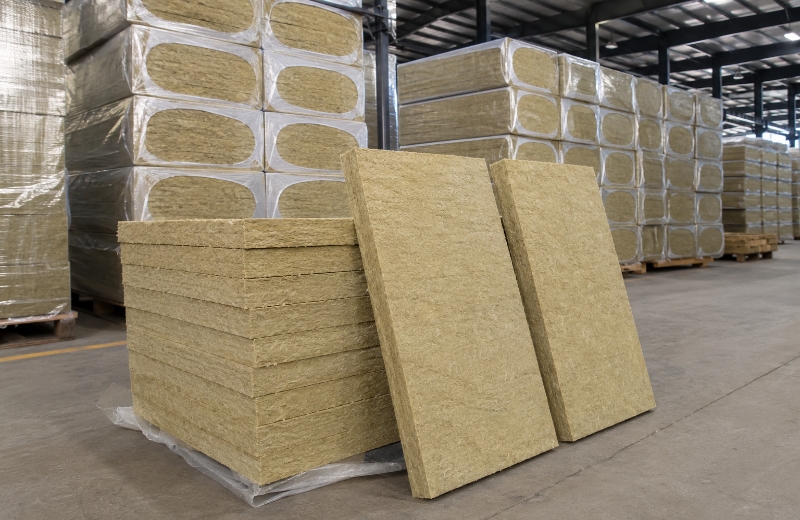
Roofing applications introduce a different set of priorities than wall or floor insulation. Flat and low-slope roofs need boards that can bear foot traffic during installation and maintenance, resist ponding water, and, in most jurisdictions, meet a minimum fire classification. For concrete and steel-structure roof decks specifically, thickness and compressive strength requirements can vary by deck type — this guide to concrete roof thermal insulation boards walks through installation sequencing and board selection by roof type in more detail.
Buyers specifying insulation for commercial roofing at volume should also factor in:
Ballasted vs. mechanically attached systems, which have different compressive strength minimums
UV exposure during installation, since XPS should generally be covered promptly after placement even though it is more UV-resistant than EPS
Tapered board availability, needed on roofs requiring positive drainage slope
Price per cubic meter is the number most buyers compare first, but it isn't the number that determines whether an order goes smoothly. A supplier's production consistency, certification record, and ability to customize thickness or facing for a specific project matter just as much once you're ordering at scale. This comparison of factors to weigh when sourcing panels — pricing, quality, and supplier reliability — is a useful reference point for buyers comparing multiple quotes.
Huamei manufactures extruded polystyrene board directly across multiple production facilities, which allows for tighter control over density consistency and thickness tolerance across large orders than is typical when sourcing through a trading intermediary. Factory-direct production also generally means more flexibility on custom thickness, size, and facing requests, since the order doesn't need to pass through a second layer of negotiation before reaching the production line.
A short supplier evaluation checklist worth applying to any quote:
Does the quoted price include third-party test reports, or only self-reported specs?
Can the factory hold thickness tolerance across a full container load, not just a sample panel?
What is the standard lead time for the quoted volume, and does it match your project schedule?
Are certifications (ISO, ASTM, SGS, etc.) current and verifiable?
Minimum order quantities for XPS board vary by manufacturer, but most factory-direct suppliers set MOQs around one container load (roughly 20–26 cubic meters, depending on thickness and stacking density) rather than by piece count, since freight economics make smaller orders inefficient for both sides. When planning logistics for a bulk purchase, buyers should account for:
Palletized vs. loose-stacked shipping, which affects both loading time and in-transit damage risk
Moisture protection during ocean freight, since even low-absorption boards benefit from shrink-wrap or crate packaging on long transit routes
Customs documentation for fire rating and material composition, required in many destination markets before insulation can clear import inspection
Confirming packaging method and container loading plan in advance avoids the two most common bulk-shipping issues: damaged edges from loose stacking and delayed customs clearance from missing documentation.
Sourcing XPS insulation board wholesale comes down to matching density, compressive strength, and thickness to the actual thermal and mechanical demands of the project — cold storage floors and roofing decks in particular leave little margin for under-specified material. Buyers who confirm test-backed specifications, request samples ahead of a full order, and work with a factory-direct manufacturer like Huamei rather than an unverified intermediary tend to avoid the dimensional inconsistency and performance shortfalls that show up later in the build. Getting those numbers right before the purchase order goes out is far cheaper than correcting them after installation.
Most cold storage floors under racking or forklift traffic perform best with 32–45 kg/m³ density and compressive strength of 300 kPa or higher. Chiller and freezer walls can typically use a lower density than floors, since they don't carry the same mechanical load.
XPS has a closed-cell structure that gives it lower water absorption and higher compressive strength than EPS at a comparable thickness, which is why it's more commonly specified for roofing and below-grade applications where moisture exposure is ongoing. EPS remains a lower-cost option for wall insulation with less moisture exposure.
100–150mm is a common range for freezer-grade cold storage, often achieved with two layers of board rather than a single thick panel, both for structural handling reasons and to reduce thermal bridging at panel joints.
Most factory-direct suppliers set MOQs around a full container load rather than a piece count, since that volume aligns with efficient freight and production scheduling. Buyers with smaller needs should ask directly, since some manufacturers accommodate partial-container or mixed-product orders.
In many jurisdictions, yes — roofing assemblies typically require a minimum flame-retardant classification such as Class B1. Confirming the fire rating and requesting supporting test documentation before ordering avoids compliance issues during building inspection.
Copyright © Huamei Energy-saving Technology Group Co., Ltd. All Rights Reserved | Sitemap | Privacy Policy
Insulation solutions LIST: Insulation solutions LIST
