E-mail: marketing@hbhuamei.com
When selecting insulation materials for industrial or building applications, a common question arises: high-temperature insulation glass wool vs foil-clad glass wool — which performs better in heat resistance?
Both materials are based on glass wool, but their structure and surface treatment differ significantly, leading to variations in thermal performance, durability, and application suitability. This article provides a comprehensive comparison to help you make the right decision.
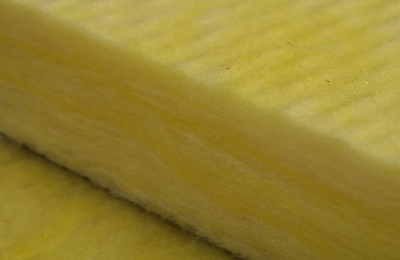
High-temperature insulation glass wool
High-temperature insulation glass wool is designed specifically for environments exposed to elevated temperatures. It is manufactured with heat-resistant glass fibers and often uses modified or reduced binders to improve thermal stability.
Continuous temperature resistance: 400°C–500°C
Peak temperature tolerance: up to 550°C–600°C
Excellent thermal insulation performance
Lightweight and flexible
Suitable for industrial heat systems
This type of insulation is widely used where sustained high temperatures are present.
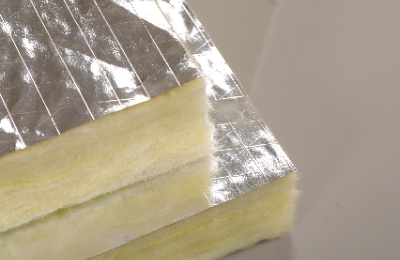
Foil-clad glass wool
Foil-clad glass wool refers to standard glass wool insulation laminated with a layer of aluminum foil on one side. The foil acts as a vapor barrier and radiant heat reflector.
Typical temperature resistance: 200°C–250°C (limited by binder and foil adhesive)
Reflects radiant heat effectively
Provides moisture and vapor resistance
Improves surface durability
While it enhances certain properties, foil cladding does not significantly increase the core material’s high-temperature resistance.
The most critical factor in this comparison is heat tolerance.
High-temperature insulation glass wool:
Designed for extreme conditions, it maintains structural integrity and insulation performance at temperatures up to 500°C continuously.
Foil-clad glass wool:
Limited by the aluminum foil adhesive and binder, it typically performs safely only up to 200°C–250°C.
Conclusion:
In terms of heat resistance, high-temperature insulation glass wool clearly outperforms foil-clad glass wool.
High-temperature glass wool:
Relies on fiber structure to trap air and reduce heat conduction.
Foil-clad glass wool:
Combines fiber insulation with radiant heat reflection from the foil surface.
While foil-clad products can improve efficiency in low-to-moderate temperature environments, they are not designed for extreme heat.
High-temperature insulation glass wool is ideal for:
Industrial furnaces
Boilers and kilns
High-temperature pipelines
Power generation facilities
Foil-clad glass wool is suitable for:
HVAC duct insulation
Building walls and ceilings
Air conditioning systems
Moisture-sensitive environments
Foil-clad glass wool:
Excellent vapor barrier due to aluminum foil layer
High-temperature glass wool:
Typically requires additional vapor protection if used in humid environments
Foil-clad products have a clear advantage in moisture control, but not in high-temperature resistance.
At elevated temperatures:
Foil layers may delaminate or degrade
Adhesives can fail
Structural integrity may weaken
In contrast, high-temperature glass wool maintains performance stability under prolonged heat exposure.
| Feature | High-Temperature Glass Wool | Foil-Clad Glass Wool |
|---|---|---|
| Continuous Temperature | 400–500°C | 200–250°C |
| Maximum Temperature | 550–600°C | ~250–300°C |
| Radiant Heat Reflection | No | Yes |
| Moisture Resistance | Moderate | Excellent |
| High-Heat Durability | Excellent | Limited |
| Typical Applications | Industrial | HVAC & buildings |
If your priority is high-temperature insulation performance, the answer is clear:
Choose high-temperature insulation glass wool for environments exceeding 250°C or requiring long-term thermal stability.
However, if your application involves:
Moderate temperatures
Moisture control
HVAC efficiency
Foil-clad glass wool is a more practical and cost-effective solution.
In the debate of high-temperature insulation glass wool vs foil-clad glass wool, the winner depends on the application—but strictly in terms of heat resistance, high-temperature glass wool is the superior material.
Foil-clad glass wool enhances insulation performance in controlled environments, but it cannot match the thermal endurance required for industrial high-heat applications. Selecting the right material ensures not only efficiency but also long-term safety and reliability.
Copyright © Huamei Energy-saving Technology Group Co., Ltd. All Rights Reserved | Sitemap | Privacy Policy
Insulation solutions LIST: Insulation solutions LIST
