E-mail: marketing@hbhuamei.com
Industrial pipelines are the backbone of modern infrastructure. From petrochemical plants and power stations to airports, food processing facilities, HVAC systems, and pharmaceutical manufacturing, pipelines transport steam, chilled water, chemicals, oil, gas, and process fluids across highly demanding environments. In these systems, selecting the right pipe insulation material is not only about reducing heat loss — it directly affects energy efficiency, operational stability, worker safety, condensation control, and long-term maintenance costs.
As industrial facilities continue pursuing energy-saving and carbon-reduction goals, the global industrial insulation market is growing rapidly. According to multiple industry studies, industrial insulation can reduce heat energy loss by up to 70–90% in properly designed systems, while improving equipment lifespan and reducing greenhouse gas emissions. This is why a professional industrial insulation solution has become an essential part of modern pipeline engineering.
At Huamei Energy-saving Technology Group, industrial insulation systems are designed around real project conditions, combining rubber foam insulation and glass wool insulation to meet different pipeline temperature ranges, environmental conditions, and energy efficiency requirements.
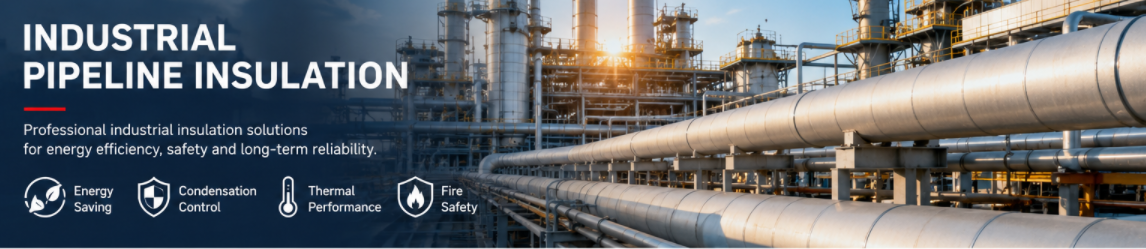
Industrial pipelines are constantly exposed to temperature fluctuations, moisture, mechanical stress, and environmental corrosion. Without proper insulation, facilities often face problems such as:
Excessive energy loss during heat transfer
Condensation and water accumulation on chilled pipelines
Corrosion under insulation (CUI)
Reduced system efficiency
Temperature instability affecting industrial processes
Increased operational costs
Safety risks caused by hot surface exposure
A complete industrial insulation solution addresses all of these risks while improving the reliability of the overall system.
In practice, insulation systems must be selected based on:
Operating temperature
Humidity conditions
Indoor or outdoor installation
Fire resistance requirements
Thermal conductivity targets
Pipeline diameter and layout complexity
Long-term maintenance expectations
This is where rubber foam and glass wool serve different but complementary roles in industrial pipeline insulation.
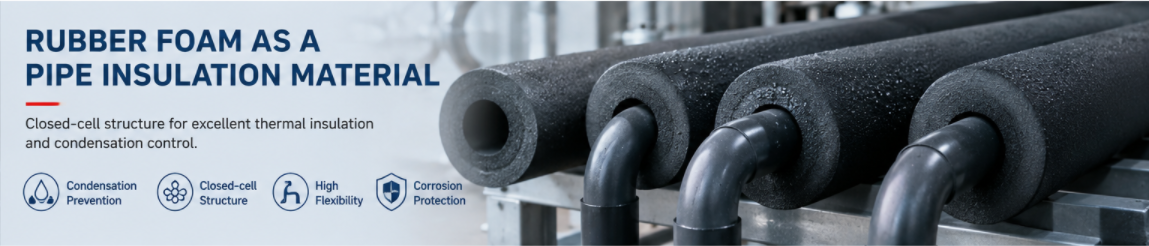
Rubber Foam Pipe Insulation Material
Rubber foam insulation is widely used in chilled water pipelines, HVAC piping, refrigeration systems, and low-to-medium temperature industrial pipelines. Its closed-cell structure provides excellent moisture resistance and condensation prevention capabilities.
For industrial systems operating below ambient temperature, condensation is often the biggest operational challenge. Once moisture penetrates the insulation layer, thermal performance drops rapidly and corrosion risks increase significantly. Rubber foam insulation solves this issue by integrating thermal insulation and vapor barrier performance into one material structure.
As a high-performance pipe insulation material, rubber foam offers:
Low thermal conductivity
Excellent vapor resistance
Flexible installation performance
Condensation prevention
Corrosion reduction support
Stable long-term thermal performance
Reduced maintenance frequency
This makes rubber foam particularly suitable for:
Chilled water pipelines
Refrigeration lines
Cooling water circulation systems
Cold process pipelines
Airport mechanical systems
Commercial and industrial utility piping
In industrial environments, pipeline routing is often complex, involving elbows, valves, joints, and confined installation spaces. Rubber foam’s flexibility allows installers to achieve tight sealing performance around irregular pipeline structures.
Its closed-cell structure also minimizes moisture ingress, helping reduce:
Surface condensation
Mold growth risks
Insulation degradation
Corrosion under insulation
For facilities focused on operational stability and energy savings, this directly improves system efficiency and lifecycle cost performance.
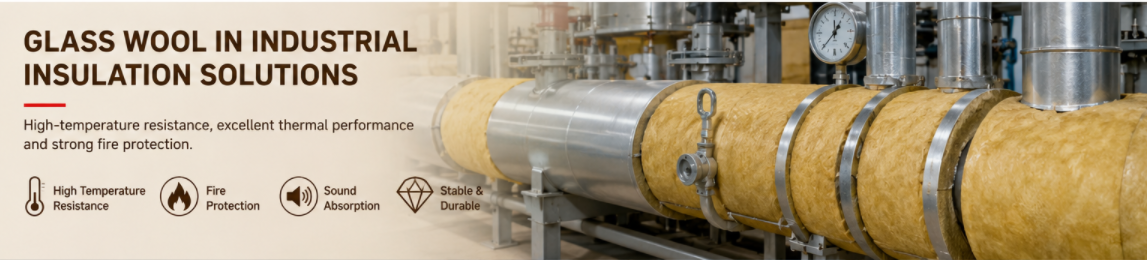
Glass Wool in Industrial Insulation Solutions
Glass wool insulation plays a different role within industrial pipeline systems. While rubber foam is typically preferred for condensation control and lower-temperature systems, glass wool is commonly selected for medium- and high-temperature industrial pipelines where thermal resistance and fire performance become critical.
Glass wool insulation is manufactured from inorganic fibers that trap air within a porous structure, significantly reducing heat transfer.
In industrial pipeline engineering, glass wool is frequently used for:
Steam pipelines
Boiler systems
High-temperature process piping
Petrochemical systems
Thermal power facilities
Industrial heating networks
Large-diameter outdoor pipelines
Its main advantages include:
High temperature resistance
Strong thermal insulation performance
Excellent sound absorption
Fire-resistant properties
Stable dimensional performance
Suitability for large industrial installations
For many industrial facilities, glass wool becomes a core component of a long-term industrial insulation solution where fire safety and thermal retention are equally important.
Industrial systems operating at elevated temperatures can experience major heat loss without effective insulation. Properly installed glass wool insulation significantly improves heat retention efficiency while helping facilities maintain stable process temperatures.
At the same time, many industrial projects require insulation systems with strong fire performance characteristics. Glass wool’s inorganic composition supports these requirements and is commonly integrated into fire-safe engineering designs.
Because of its lightweight structure and adaptability, glass wool can also be applied to:
Tanks
Duct systems
Equipment insulation
Industrial vessels
Utility corridors
This makes it one of the most versatile pipe insulation material options for large-scale industrial projects.
In modern industrial projects, insulation systems are rarely based on a single material alone. Instead, engineers often combine rubber foam and glass wool depending on the operating conditions of different pipeline sections.
For example:
Chilled water and condensation-sensitive pipelines may use rubber foam insulation
Steam and high-temperature pipelines may use glass wool insulation
Mechanical rooms may combine both materials based on equipment function
HVAC and process systems may require different insulation strategies within the same facility
This layered engineering approach improves:
Energy efficiency
Fire safety
Moisture protection
Operational stability
Lifecycle cost management
A professional industrial insulation solution therefore depends not only on material quality, but also on correct system matching and project-specific engineering support.
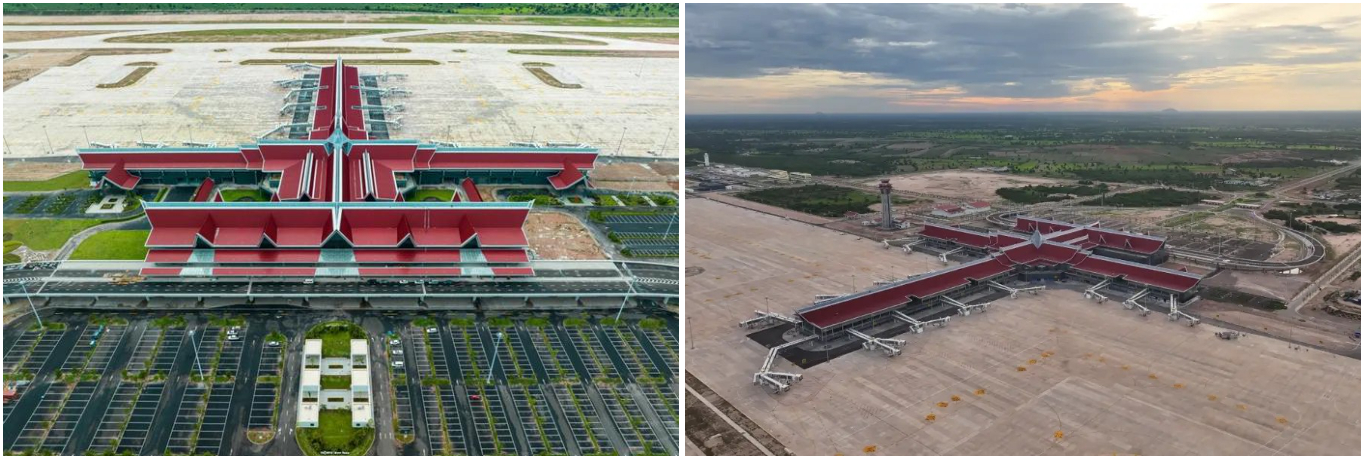
One example demonstrating Huamei’s industrial insulation capabilities is the Angkor International Airport Project in Cambodia.
As a major international infrastructure project, the airport required reliable thermal insulation systems capable of supporting large-scale HVAC and pipeline operations under challenging climate conditions.
In this project, insulation performance was especially important because:
The regional climate involves high temperature and humidity
HVAC systems operate continuously under heavy load
Condensation control is critical for mechanical system stability
Energy efficiency directly impacts long-term operational costs
Large pipeline networks require durable and consistent insulation performance
Huamei supplied insulation materials designed to support efficient thermal management and stable pipeline operation throughout the facility.
The successful implementation of this project demonstrates Huamei’s ability to participate in complex international infrastructure developments while delivering practical industrial insulation solution support for large-scale engineering systems.
Selecting the correct insulation material depends on the operational characteristics of the pipeline system.
Chilled water pipelines
Refrigeration systems
Condensation-sensitive environments
HVAC utility piping
Flexible installation areas
Moisture-control applications
Steam pipelines
High-temperature process systems
Fire-resistant applications
Industrial heating systems
Large industrial facilities
Equipment requiring sound absorption
In many industrial facilities, the most effective approach is integrating both materials into a unified insulation strategy.
As industrial facilities continue prioritizing energy efficiency, sustainability, and operational safety, demand for advanced pipe insulation material technologies is expected to grow steadily.
Modern industrial insulation systems are increasingly focused on:
Lower thermal conductivity
Improved moisture resistance
Fire-safe engineering
Reduced lifecycle costs
Sustainable building performance
Long-term durability
Easier installation and maintenance
For global infrastructure projects, selecting an experienced insulation supplier has become increasingly important.
With extensive manufacturing experience and participation in large international projects, Huamei continues providing integrated industrial insulation solution support for industrial pipelines, HVAC systems, commercial infrastructure, and energy-efficient engineering applications worldwide.
Get a Free Technical Consultation on Professional Industrial Insulation Solutions→
Copyright © Huamei Energy-saving Technology Group Co., Ltd. All Rights Reserved | Sitemap | Privacy Policy
Insulation solutions LIST: Insulation solutions LIST
