Modern commercial buildings rely heavily on HVAC systems to maintain indoor comfort, air quality, and operational efficiency. In airports, stadiums, hospitals, industrial plants, and large commercial complexes, HVAC systems often account for a significant portion of total building energy consumption. According to industry market research, HVAC systems can represent nearly 40% of building electricity usage, while poorly insulated duct systems may lead to 25–40% energy losses.
As global energy standards continue to tighten, the demand for high-performance HVAC insulation materials is increasing rapidly. Industry reports estimate that the global HVAC insulation market will exceed USD 9 billion by 2030, driven by stricter building codes, energy-efficiency regulations, and the growing need for sustainable construction.
For modern HVAC systems, insulation is no longer simply a supplementary material. It has become a core component of system performance, directly affecting:
Energy efficiency
Thermal stability
Condensation prevention
Acoustic comfort
Fire safety performance
Long-term operating costs
At Huamei Energy-saving Technology Group, we provide professional duct insulation solution systems for large-scale commercial and industrial HVAC applications worldwide. Our solutions primarily combine two core HVAC insulation materials:
Rubber foam insulation
Glass wool insulation
Each material serves a different but complementary function within HVAC systems.
Understanding HVAC Insulation Materials in Modern HVAC Systems
HVAC insulation materials are designed to reduce heat transfer, stabilize system temperature, minimize energy loss, and improve operational reliability throughout the entire heating, ventilation, and air conditioning network.
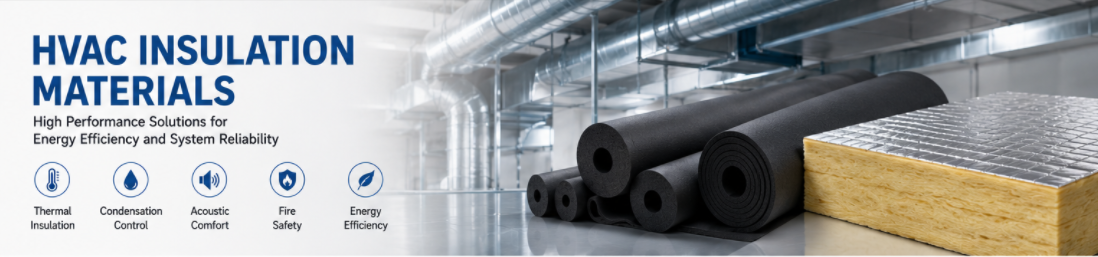
HVAC insulation materials
In practical HVAC engineering, insulation systems are commonly applied to:
A complete duct insulation solution must address several technical challenges simultaneously:
| HVAC Requirement | Technical Purpose |
|---|
| Thermal insulation | Reduce cooling and heating losses |
| Vapor control | Prevent condensation and corrosion |
| Acoustic absorption | Reduce airflow and equipment noise |
| Fire resistance | Improve building safety |
| System durability | Maintain long-term performance |
| Energy efficiency | Lower HVAC operating costs |
Different HVAC insulation materials provide different advantages depending on project requirements.
Rubber Foam Insulation in HVAC Systems
Why Rubber Foam Is Widely Used in HVAC Applications
Rubber foam insulation, also known as elastomeric foam insulation, is one of the most widely used HVAC insulation materials for chilled water systems and refrigeration pipelines.
Its closed-cell structure provides excellent moisture resistance and vapor barrier performance. Industry technical references note that elastomeric rubber foam has very high resistance to water vapor transmission, making it highly effective in preventing surface condensation in air-conditioning and refrigeration systems.
This makes rubber foam especially suitable for:
Chilled water pipes
Refrigerant lines
Condensation-prone HVAC areas
Data center cooling systems
High-humidity environments

Rubber Foam Insulation in HVAC Systems
Main Functions of Rubber Foam in HVAC Systems
1. Condensation Prevention
One of the biggest risks in HVAC systems is condensation. When cold pipes are exposed to warm humid air, moisture forms on pipe surfaces, potentially causing:
Corrosion
Mold growth
Ceiling damage
Insulation failure
Reduced HVAC efficiency
Rubber foam insulation minimizes this risk through its closed-cell structure and built-in vapor resistance.
2. Thermal Efficiency Improvement
Rubber foam reduces thermal exchange between HVAC pipes and ambient air, helping maintain stable system temperatures.
This improves:
3. System Durability
HVAC systems operate continuously for years under changing environmental conditions. Rubber foam insulation offers:
Flexible installation
Long-term dimensional stability
Resistance to moisture penetration
Reduced maintenance frequency
This is especially important for large commercial HVAC projects.
4. Noise Reduction
Rubber foam also contributes to acoustic comfort by reducing vibration and airflow noise generated by HVAC systems.
Glass Wool Insulation in HVAC Systems
Why Glass Wool Remains a Core HVAC Insulation Material
Glass wool insulation continues to play a critical role in modern HVAC systems due to its combination of:
Industry data shows that glass wool remains one of the dominant HVAC insulation materials globally because of its strong balance between thermal performance and economic efficiency.
Glass wool is manufactured from fine glass fibers that trap air within the material structure, significantly reducing heat transfer.
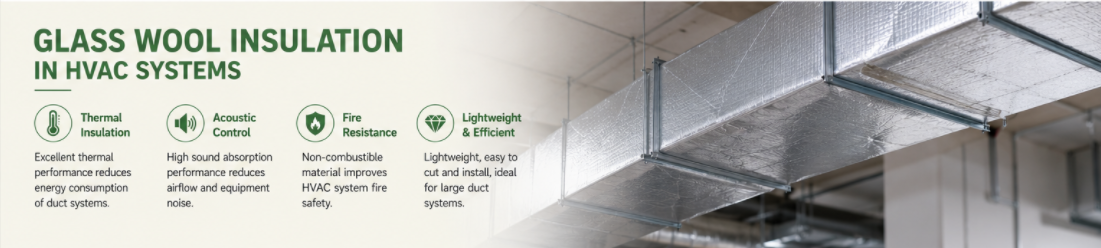
Glass Wool Insulation in HVAC Systems
Main Functions of Glass Wool in HVAC Systems
1. Duct Thermal Insulation
Glass wool is commonly used for HVAC air ducts, especially in large commercial buildings where long duct runs can result in major energy losses.
Proper duct insulation solution design helps:
Stabilize air temperature
Improve airflow efficiency
Reduce HVAC energy consumption
Improve occupant comfort
2. Acoustic Control
One of the major advantages of glass wool is sound absorption.
In large HVAC systems, air movement and equipment vibration can create substantial noise. Glass wool insulation helps reduce:
This is particularly valuable in:
3. Fire Resistance
HVAC systems often run throughout entire buildings, making fire safety extremely important.
Glass wool provides strong fire-resistant performance and is widely used where HVAC systems must comply with strict building safety standards.
4. Large-Scale Duct System Efficiency
For extensive duct networks, glass wool offers a practical balance between:
How Rubber Foam and Glass Wool Work Together in a Complete Duct Insulation Solution
In modern HVAC engineering, rubber foam and glass wool are often used together rather than treated as competing materials.
Their functional positioning is different:
| Material | Main HVAC Function | Typical Application |
|---|
| Rubber Foam | Condensation prevention and vapor control | Chilled water pipes, refrigeration lines |
| Glass Wool | Thermal insulation, acoustic control, fire resistance | Air ducts, equipment rooms, ventilation systems |
A professional duct insulation solution usually combines both materials strategically to maximize overall HVAC system performance.
HVAC Insulation Solution for Airports and Large Public Buildings
Large public infrastructure projects require HVAC insulation materials capable of operating reliably under:
Huamei has extensive experience supporting large-scale HVAC projects internationally.
Case Study: Harare International Airport, Zimbabwe
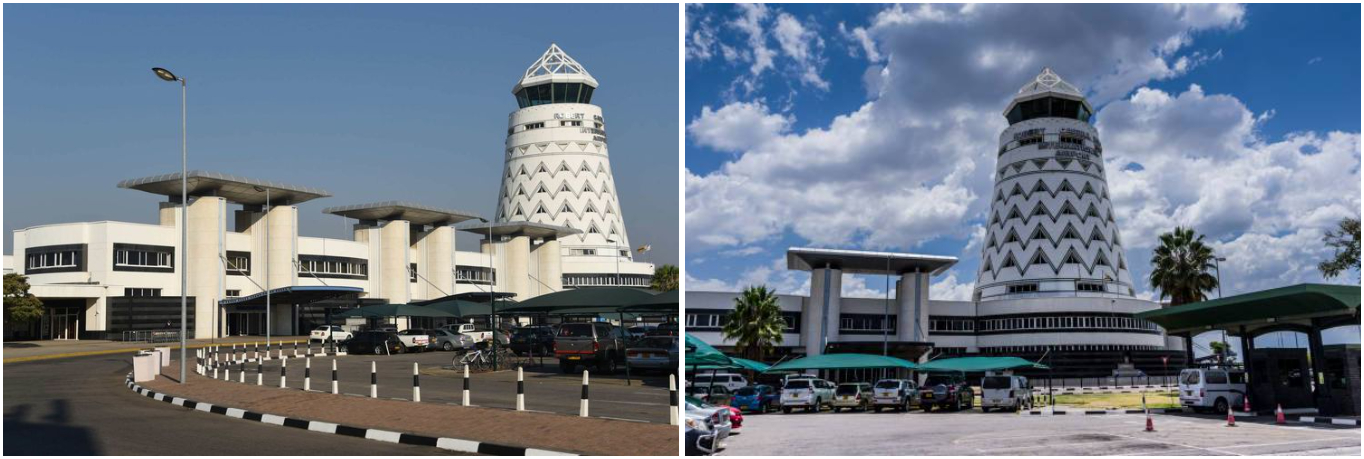
Large-Scale HVAC Insulation for Airport Infrastructure
At Harare International Airport Project Case, Huamei supplied HVAC insulation materials for one of Zimbabwe’s major airport infrastructure projects.
Airport HVAC systems require particularly demanding insulation performance because they operate continuously under high passenger traffic conditions.
The project required insulation solutions capable of:
Maintaining stable thermal performance
Reducing HVAC operational losses
Supporting long-distance duct systems
Controlling condensation risks
Improving passenger comfort
Huamei’s HVAC insulation solution helped support the airport’s modern ventilation and cooling infrastructure while improving overall system efficiency and operational reliability.
Case Study: Olympic Stadium Abidjan
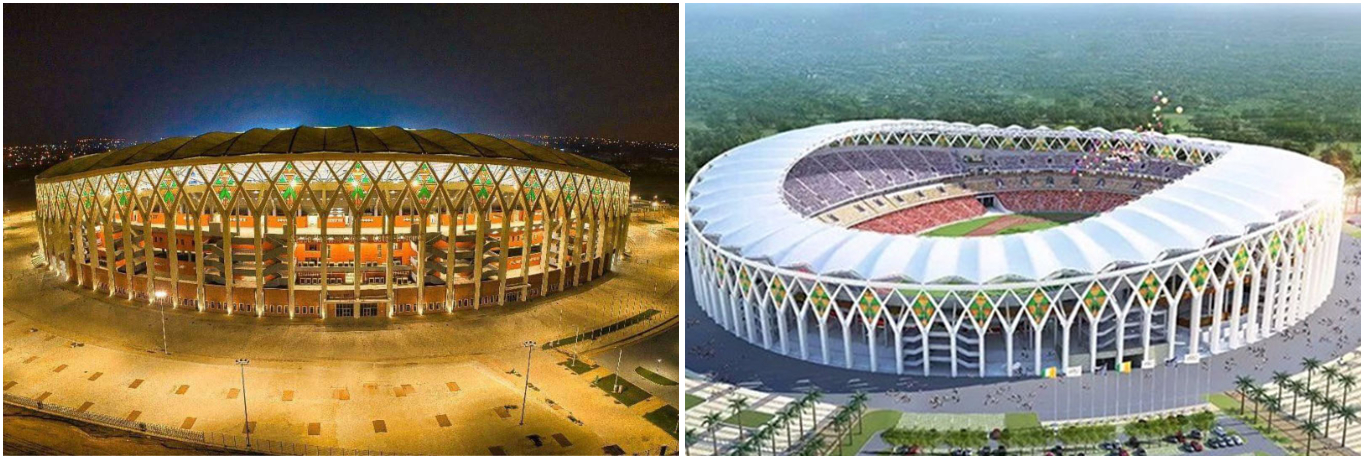
HVAC Insulation Solution for a Large Stadium Environment
The Olympic Stadium Abidjan Project Case demonstrates Huamei’s capability in handling complex HVAC insulation requirements for large sports venues.
Stadium HVAC systems face unique engineering challenges:
Extremely large air circulation volumes
High cooling demand during events
Complex duct routing systems
High acoustic requirements
Long operating cycles
For this project, HVAC insulation materials played an important role in:
Improving duct thermal efficiency
Supporting indoor comfort stability
Reducing HVAC energy consumption
Assisting acoustic control inside the venue
Supporting long-term system durability
Projects like these demonstrate Huamei’s practical experience in delivering duct insulation solution systems for high-profile international infrastructure developments.
Why HVAC Insulation Materials Matter More Than Ever
As global construction standards continue evolving toward:
high-performance HVAC insulation materials are becoming increasingly important.
Industry research consistently shows that proper HVAC insulation contributes directly to:
Lower energy consumption
Reduced operational costs
Better indoor environmental quality
Improved equipment lifespan
Greater sustainability performance
For modern HVAC systems, insulation is not simply about covering pipes or ducts. It is a core engineering strategy that directly affects long-term building performance.
Huamei HVAC Insulation Solution
As a professional manufacturer in the insulation industry, Huamei Energy-saving Technology Group provides comprehensive HVAC insulation materials for commercial and industrial applications worldwide.
Our duct insulation solution systems support:
By combining advanced rubber foam insulation and glass wool insulation technologies, Huamei helps customers improve HVAC efficiency, system stability, and long-term operational reliability across demanding global projects.
Contact us for your customized HVAC solution→
